
As a player, you had an incredibly successful career, particularly in the Irish League with standout performances for Portadown and Glentoran.
You won the league title at Portadown and added to that success by winning the Irish Cup, before going on to achieve further accolades at Glentoran, including league titles, League Cups, and County Antrim Shields.
Looking back on those experiences, how do you reflect on your time as a prolific goalscorer and your contribution to those winning teams? How did those successes shape your career and transition into your role as a player-manager at Glenavon?
“As I mentioned, I’m proud of my career as a player. As a centre-forward, your job is to score goals, and that’s what people expect of you—and thankfully, that’s what I was able to deliver throughout my career. Ultimately, the main objective for any footballer is winning trophies, and I was fortunate enough to secure a few. That’s just how I’ve always been. Yes, we won County Antrim Shields and League Cups, but for me, the only two trophies that truly mattered were the league title and the Irish Cup. It wasn’t just about winning trophies; these are, in my view, the most prestigious, and they also earned you a spot in European competitions. The League Cups, County Antrim Shields, and Mid Ulster Cups didn’t offer the same rewards.
“In addition, even during my time at Glenavon, many managers didn’t always field their strongest teams in those smaller competitions, which diminished their significance in my eyes. For me, winning a trophy with everyone’s strongest team in the competition was the true mark of success. Securing a couple of league titles, particularly with Portadown and Glentoran, was a massive achievement. Winning the Irish Cup with Portadown was also a highlight.
“That said, I played alongside some exceptional players in some great teams. While I scored goals, you’re only as good as the players around you. Unless they provide the chances, you can’t put the ball in the net. So, while I’m certainly satisfied with my goal-scoring record, I recognise that much of my success came from the quality of those around me.”
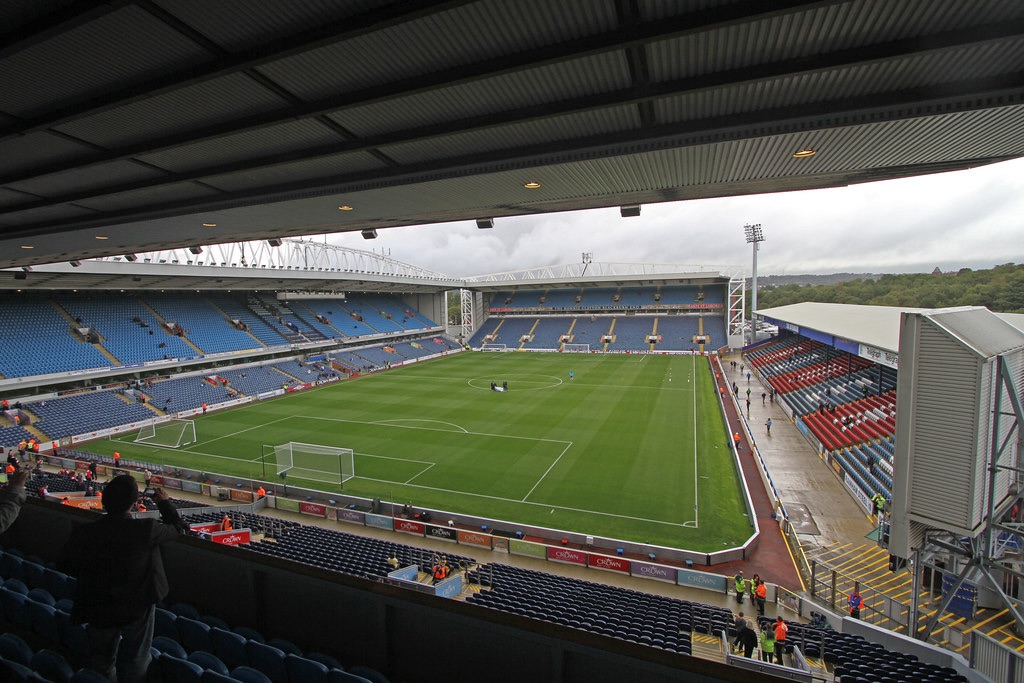
“Ewood Park 1” by Ronnie Macdonald is licensed under CC BY 2.0.
Prior to your Irish League career, you were at Blackburn Rovers as a youngster. How much did you learn from your time in England?
“Yes, I really enjoyed my time there. I had a fantastic first season, reaching the cup final and scoring over 50 goals across all competitions. Everything seemed to be going well at that point, and there was even interest from West Ham at one stage. However, my time at Blackburn was unfortunately marred by injuries. In my second year, I suffered a double hernia, and during my third year, just as I was breaking into training with the first team and becoming involved at that level, I sustained a stress fracture in my back. That injury ultimately ended my career there.
“It was unfortunate, but that’s part of football. I certainly enjoyed my time at the club, and things were progressing well before injuries started to take their toll. However, I’m not one to make excuses. Injuries are part and parcel of the game, and there’s a significant element of luck involved in staying fit, especially when you’re performing well. Many players have been in similar situations, where injuries have prevented them from reaching their full potential. It’s just the nature of the sport.
“Looking back, I also have to take some responsibility. That’s something I emphasise when coaching young players today. At the time, strength and conditioning were just starting to be introduced, and we were receiving good advice and proper coaching on those methods. But for me, it was all about playing football—I didn’t really buy into the strength and conditioning aspect. In hindsight, maybe if I had focused more on those areas, particularly building core strength, I might have avoided some of the injuries to my groin, hernias, and stress fracture. I realise now that having a stronger core could have potentially prevented those issues, and I take responsibility for that in retrospect. It’s a lesson I now pass on to others.”
Reflecting on your international career, where you not only represented the senior Northern Ireland team but also made significant contributions at the under-21 level and throughout the youth system, how proud are you of those accomplishments?
“As a young boy from Northern Ireland, one of my biggest dreams was to represent my country. That was always a major ambition of mine. While many people follow English or Scottish clubs, for me, the only team I truly supported was Glenavon. My primary focus was to become a full-time footballer, but I never dreamt specifically of playing for clubs like Manchester United or Liverpool. Instead, my two main dreams were to play for Glenavon and win a major trophy with them, and to represent Northern Ireland at the international level. So, when I finally had the opportunity to wear the national jersey, it was an incredibly proud moment for me.
“If I’m being completely honest, and I always strive to be, I think timing played a bigger role than my actual ability at the time. Northern Ireland was going through a difficult period; they were on a poor run and had gone 12 or 13 games without scoring. There was growing pressure to look beyond the usual pool of players, and many people were calling for more Irish League players to be given a chance. At that time, I happened to be one of the top performers in the league, scoring regularly, so that worked in my favour. Instead of looking to the lower leagues in England, they began to consider players from the Irish League, and that’s where a bit of luck came into play for me.
“I’ll be upfront about it: I probably wasn’t better than the players who were playing in England at the time. But the circumstances were such that Northern Ireland’s established players were under heavy criticism for the lack of goals. Then, of course, David Healy came onto the scene and began scoring goals at an incredible rate. That effectively ended any further chances for me to break into the squad. David was simply exceptional, and once he started scoring, he cemented his place in the team.
“David Healy (footballer)” by thetelf is licensed under CC BY-SA 2.0.
“Interestingly, I knew David from our time at Lisburn Youth, where we played together a few times. He was a year older than me, and I was genuinely delighted to see his success. Again, it’s a matter of timing and fortune. I got my chance, but once David started scoring for fun, the rest was history in terms of Northern Ireland football. Nonetheless, I remain immensely proud of the opportunity I had to represent my country.”
Featured image: Portadown FC History
 Callum McFadden