

You grew up supporting Glenavon, and after joining the club on loan, you eventually signed on a permanent basis before quickly transitioning into the role of player-manager. Remarkably, you held that managerial position for over 12 years, which is an incredible achievement in today’s football environment.
During your playing career, you spoke about how winning the Irish Cup, along with the league title, brought you immense pride. As a manager, you not only guided Glenavon, a club that operates without the largest budget, but you also led them to win the Irish Cup twice.
How significant was that achievement for you personally, and how proud were you to bring that level of success to a club you’ve supported since childhood?
“It was an immensely proud moment for me. My grandfather, who was a major influence in my life, was a huge Glenavon fan. He used to come and watch me play and was deeply invested in the club. His sons, my uncles Robbie and Davey, both played for Glenavon, with Robbie later enjoying a distinguished career at Wolves and also representing Northern Ireland.
“From a young age, I supported Glenavon along with my dad, attending games and sharing the passion for the club. When I returned home, my grandfather’s support shifted to me at Portadown, and later at Glentoran. Although he always hoped I would eventually play for Glenavon, my decision to join Glentoran was driven by a desire for professional success and trophies. At that time, Glenavon was struggling at the bottom of the league, and my move was more about career progression than personal attachment.
“However, when I eventually became manager and led Glenavon to win the Irish Cup twice, it felt deeply personal. The first cup final was special, but the second one was even more significant because my grandfather, who was battling dementia and cancer, was in a wheelchair. The opportunity to make him proud, especially given his declining health, meant more to me than anything.
“My children were also present at both cup finals and seeing their joy and pride in seeing their father contribute to Glenavon’s success added another layer of significance. Witnessing the happiness of those I loved and who meant so much to me made the achievement even more meaningful.
“Anyone who knows me understands that my kids are my world. Their presence on those days added a profound layer of pride and joy for me. Watching them lead the team out in both games created lasting memories for them and for me. It was a significant moment not just for me personally, but for my entire family, who have deep ties to Glenavon. My uncles played for the club, and my cousins share that same connection. Seeing so many people close to me happy and proud made the achievement even more meaningful.
“It had been 16 years since Glenavon last won a major trophy, so bringing that success back to the club was immensely satisfying. Winning the Irish Cup a second time, particularly at the new National Stadium against Linfield in their own backyard, was a tremendous accomplishment. Going into that final as underdogs, with many doubting our chances, and then securing a 2-0 victory was a remarkable achievement. The sense of pride and the happiness it brought to so many people around me made the victory even sweeter.”
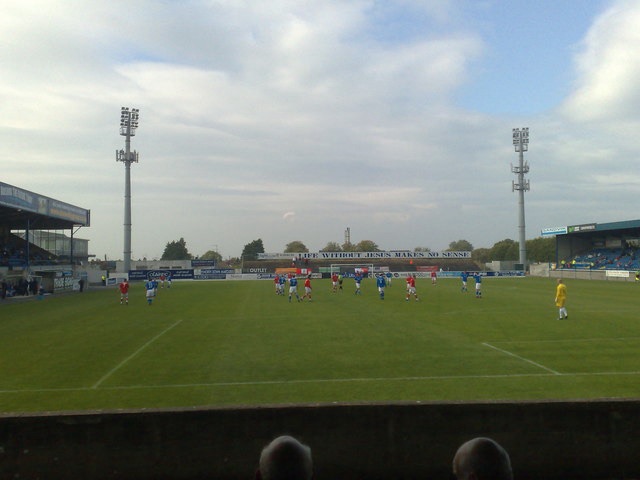
“Mourneview Park, Lurgan – geograph.org.uk – 1389685” by Dean Molyneaux is licensed under CC BY-SA 2.0.
Reflecting on your tenure at Glenavon overall, where you worked with a modest budget and faced the challenge of developing players internally, how crucial was the drive and ability to both develop and sell players in sustaining your long-term role as manager?
“I believe the importance of my support staff often goes unnoticed. I had an exceptional team around me—too many to name, given the number over the years—and their contribution was invaluable. I began managing at 31, and with still being involved in playing at times, having a capable and reliable staff was crucial. Your effectiveness as a manager is significantly enhanced by the quality of the people you surround yourself with.
“I always focused on addressing my weaknesses by bringing in individuals who excelled in those areas. While some might fear that hiring someone better could jeopardise their own position, I viewed it as essential to have the best people around me. Many of my coaching staff were indeed stronger in various aspects, and I owe them a great deal of credit for our achievements.
“Our success, including winning two cups and securing numerous European qualifications, is a testament to their hard work. However, one of my proudest achievements was the development of young players. Seeing them move on to bigger clubs, earn international caps, or play in higher leagues was incredibly rewarding.
“We provided a platform and confidence for these young talents to excel. For instance, in the 2014 Irish Cup final, James Singleton and Rhys Marshall, both just 18, played as our fullbacks. In 2016, Mark Sykes and Joel Cooper, among others, were crucial to our success. The experience and winning mentality of seasoned professionals who joined us also played a significant role in mentoring these young players.
“Beyond the youth system, we also enhanced the skills of players from lower leagues, offering them opportunities to advance their careers. Matthew Fitzpatrick’s success, particularly after we initially tried to sign him from Belfast Celtic and later brought him in from Coleraine, is a prime example of this. His performance at Glenavon was outstanding.
“For me, success was measured not just by trophies but also by how many players we developed and sold, thereby generating revenue for the club. With the challenges of competing for league titles and cups, especially from outside the top six, creating value through player development and transfers became a key metric of success. This approach, while not universally adopted, represents a meaningful measure of achievement for clubs with tighter budgets.”
How do you reflect on your departure from Glenavon in 2023 and how have you spent your time in the last year now that you are outwith management?
“I must admit I am disappointed with how things ended at Glenavon. However, it’s part of football, which often involves differing opinions and decisions. Throughout my final years, we set and consistently met realistic targets, including finishing in seventh place, which was achieved annually. These goals were presented to the board and directors, and it was a collective effort, not just mine, involving the entire management team and players.
“Despite our successes, it was disheartening to lose my position under those circumstances, particularly given my deep passion and love for the club. On reflection, I had several opportunities to move to more prominent roles during my tenure, but I chose to remain loyal to Glenavon. My commitment was driven by my respect for individuals like Gordon Irwin, our sponsors, and the board members who supported me throughout my time there.
“At the end, our limited budget made it challenging to compete effectively, and it was disheartening not to be given more time to address the situation. Despite having a period where we went ten games unbeaten and overcoming a tough spell with ten games without a win, I was confident that, given time, we would achieve our target of finishing in seventh place. The early part of the season had its difficulties, including a slow start and significant changes in the squad, but I believed in our ability to turn things around.
“What was particularly disappointing was the abrupt decision to end my tenure after a period of difficulty, especially after the commitment and effort my staff and I had invested over the past 11 or 12 years.
“The hardest part was the inaccurate claims from the chairman and board that I had expressed a desire to resign—something that was completely untrue. Anyone who knows me, including players and staff, would attest that I have never been one to quit. I have always faced challenges head-on, both as a footballer and in all aspects of my life.
“The misinformation and other negative statements from the board were disappointing, but I understand that in football, such situations can arise. This experience has been a valuable lesson. Working closely with a board for the first time highlighted the reality that, under pressure, loyalties can shift, and even those who have contributed significantly can find themselves at risk.
“Moving forward, I will take these lessons with me and be more cautious in similar situations. Every experience offers something to learn, and I will use this one to inform my next steps.”
Finally, Gary, given your notable achievements both as a player and as a manager, do you have aspirations to return to football within the Irish League or elsewhere?
“I’d never say never about returning to football. I genuinely enjoyed management, especially until the end, despite the challenges and misinformation that emerged. The pleasure I found in management was significant, but those experiences inevitably impact one’s perspective.
“Currently, I’m not actively pursuing opportunities or attending games with managerial vacancies in mind. I avoid watching games with the intention of assessing under-pressure managers, as I believe it’s important to respect their positions and avoid creating unnecessary speculation. I keep up with the Irish League through highlights and other media, as it’s still close to my heart.
“If a compelling opportunity were to arise, especially with teams in the top six or within a context that offers potential growth, I would certainly consider it. However, at the moment, I’m not actively seeking a return. That said, in football, circumstances can change, and I would be open to discussing any future possibilities that may come my way.”
Featured image: “Gary Hamilton” by Ben d02 is licensed under CC BY-SA 4.0.
 Callum McFadden