
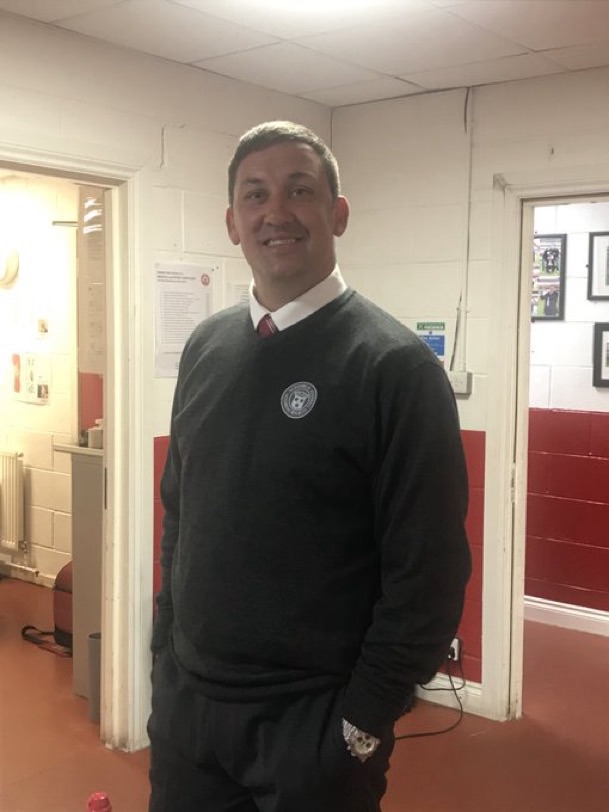
You spent several years playing for Hamilton Academical before stepping into the managerial role from 2015 to 2019, succeeding Alex Neil after his move to Norwich City.
It was a particularly successful period for the club, marked by maintaining stability in the Scottish Premiership. What do you think were the key factors behind that success, and how did your experience as a former player influence your approach to management?
“Looking back, I think the significance of what we achieved becomes clearer the longer you’re away from it. When you’re in the thick of it, you don’t always feel like you’re doing as well as you actually are. Losing games is tough—especially when, as a manager, you’re wired to be a winner. So, when you’re losing more than you’re winning, it can feel frustrating.
“At the time, you don’t fully appreciate the success because you’re so focused on wanting to see progress and growth. You want to build something and become more established, rather than just fight for survival every season.
“But now, with hindsight, I realise that simply surviving in the Premiership was a big achievement for Hamilton. The club was trying to stay afloat in a very competitive league, and that in itself was significant.
“At the time, it didn’t always feel that way, but looking back, I can appreciate the magnitude of what we accomplished.”
Reflecting on your time as manager at Hamilton, what would you say were the standout moments for you personally?
“I think the highlight for me was simply staying up every year. Every season, people expected us to go down, but we always managed to fight, scrap, and secure the points we needed to remain in the league. So, each season we stayed up was a major achievement in itself.
“There were also some standout games—winning at Ibrox, for example, and putting in a fantastic performance at Easter Road. That win was particularly special. But overall, the biggest highlight was consistently defying expectations and maintaining our place in the Premiership each year.”
After your time in charge at Hamilton, you had the opportunity to observe and learn from coaches across various European clubs, including Real Betis, Celtic, and Leicester.
How do you reflect on those experiences, and what insights did you gain from working alongside some of the most respected coaches in European football?
“It was a fantastic experience to have the opportunity to visit those clubs. Had it not been for Covid, I would have done even more, but everything came to a halt when the lockdown began in March 2020. It’s been frustrating not being able to continue visiting other clubs, but the time I did have was invaluable. Speaking with top managers at the highest level and seeing how they operate was a great learning experience.
“As a young coach and manager at the time, it was especially important for me to absorb as much as I could. When I took the Hamilton job, I transitioned straight from playing to managing at just 34 years old—it was a real ‘sink or swim’ moment. So that period of learning from some of the best in the game was absolutely invaluable.”
Rewinding back to your playing career, you started professionally at Ross County. How do you reflect on your time there, having played over 100 games and becoming an established player?
“It was great. I went there as a 17-year-old with Gordon Chisholm, aiming to break into the U18s, but within a few weeks, I was in the first team. That was a fantastic experience. I still have fond memories of it, and even now, when I go back up to Inverness, it feels like going home in a way.
“I spent my formative years there, from 17 to 24, so I’m still very comfortable in the area. All my memories of Ross County are positive—it was a great club and an excellent education for me.”
You also had a loan spell at Peterhead during your time at Ross County. How do you reflect on your time at Balmoor, and do you encourage young players to take on loan spells to gain experience?
“Definitely. When I first went into senior football at 16, I went to Clydebank halfway through the season. My dad was friends with Kenny Brannigan, who played there, and they needed players for a reserve game. I ended up playing a couple of games, and then I joined full-time.
“After that, I went on loan to the juniors, playing junior football in the Ayrshire League at 16, just turning 17. That experience toughened me up, and there’s no doubt in my mind that it helped me break into the Ross County first team at 17.
“Playing with men at an early age gives young players a huge advantage, so I definitely encourage them to go out and play senior football, at any level, as early as possible.”
In 2006, you joined Gretna as their record signing during a period of heavy investment. You experienced both the highs and lows there, with the success and the collapse that followed. How do you reflect on that time?
“It was a great experience but also a tough one. When I joined in January, they were at the top of League One and pushing for promotion to the Championship, and the goal was to get into the Premier League.
“That was the year they reached the Scottish Cup final, but I was cup-tied and couldn’t play. Still, it was a fantastic time to be at the club, and everything was going well.
“Then, the following year, we won the Championship, but I snapped my ankle ligaments and missed the Premier League season.
“I left in January and went to Hibs. So, while things were starting to go wrong financially, I managed to get out before it all collapsed. It was disappointing because I wanted to play in the Premier League and see the club continue its success, but overall, my experience at Gretna was a positive one.”
In regard to joining Hibs—how did it feel to join such a big club in Scotland?
“It was great. When I left Gretna, Donald Park, who I had worked with at Ross County, called me up and asked me to come in.
“I hadn’t played for eight or nine months at that point, so I had to prove my fitness, but once I did, I signed. Hibs is a fantastic club, and I probably didn’t fully appreciate the size of the club until I was actually playing for them. It was definitely a highlight of my career.”
After Hibs, you moved to Hamilton, where you had a respected playing career before going on to become manager. One unique moment was beating Hibs to win promotion back to the Scottish Premiership.
How was that, especially considering most people assumed Hibs would win?
“Yeah, even when we lost the first leg, we felt like we were the better team. Everyone thought it was over, but Alex Neil was an excellent manager, and nobody at Hamilton thought we couldn’t go to Hibs and win.
“We scored an early goal, which gave us belief, and even though we didn’t score the second until the last second of the game, we always believed we were going to win promotion. That belief was largely down to Alex.”
Finally, Martin, during Alex Neil’s time at Hamilton, the club had some incredible results, like beating Celtic at Celtic Park. What made that period so successful under him?
“I think it was his organisation. He set the team up clearly, and we all knew what was expected of us. It was also a case of everything just clicking—the balance of characters, youth, experience, and leadership was right.
“When you get that combination, it can really take off, and Alex was a huge factor in that success. After he left, we tried to maintain that momentum, but it wasn’t easy without him.”
Featured image: Hamilton Accies FC
 Callum McFadden