
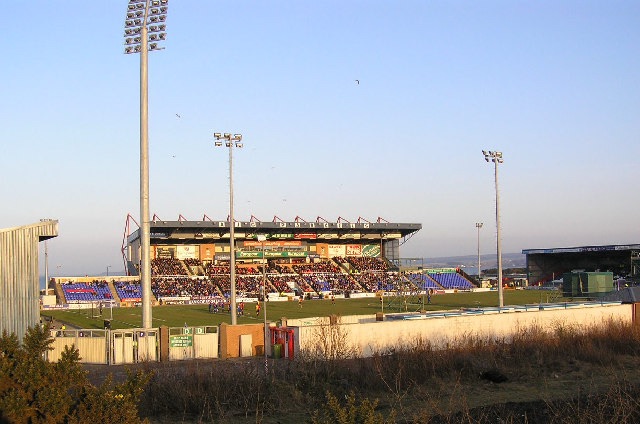
Inverness Caledonian Thistle Football Club was officially formed in August 1994. The club was born from a merger of two Highland League clubs, Caledonian FC and Inverness Thistle FC. Both clubs, each with over a century of history, had struggled to gain entry into the Scottish Football League (SFL). When the SFL expanded in 1994, the merger paved the way for a professional team in the Highland capital.
ICT initially competed in the Third Division, the lowest tier of the Scottish football league system at the time. The club’s early years were characterised by modest beginnings but a clear sense of ambition. The merger was controversial, as both original clubs had loyal fanbases with longstanding rivalries. However, through strategic planning and focused leadership, the club began to build a united fanbase and community support.
ICT’s first major milestone came in 1997 when they won promotion to the Second Division. Under the guidance of managers Steve Paterson and later John Robertson, Caley Thistle built a reputation for being a tough, competitive team. By the 2003-2004 season, ICT reached the First Division, marking its entry into Scottish football’s second-highest league.
Their reputation as giant killers began to solidify during this period. In the Scottish Cup of 2000, ICT famously defeated Celtic 3-1 in Glasgow. The headline ‘Super Caley Go Ballistic, Celtic Are Atrocious’ made front-page news and is still remembered as one of the most iconic moments in Scottish football. The shock result brought national attention to the club and set the stage for more success in the years to come.
In 2004, Inverness Caledonian Thistle reached the Scottish Premier League (SPL) for the first time, a feat few expected from a club that was just ten years old. However, their promotion presented a challenge: their home ground, Caledonian Stadium, did not meet SPL standards. As a result, ICT played home matches 100 miles away in Aberdeen’s Pittodrie Stadium for a portion of the season, a significant logistical and financial burden. Despite this, the team managed to finish in the middle of the league table, securing their place in the top division.
In 2005, ICT’s Caledonian Stadium was upgraded to meet SPL requirements, allowing them to play home matches in Inverness. The return to Inverness helped strengthen the club’s bond with the local community, boosting fan support and cementing the club’s position in Scottish football’s top tier.
The following years were a turbulent time for ICT. After several seasons of battling relegation, they were eventually relegated from the SPL in 2009. However, the club’s resilience shone through, and they returned to the SPL in 2010 under the management of Terry Butcher.
During this period, ICT established itself as a competitive force in the SPL, often finishing in the top half of the league table. The club developed a reputation for nurturing young talent which further endeared them to fans.
The pinnacle of Inverness Caledonian Thistle’s achievements came in the 2014-2015 season when they won the Scottish Cup for the first time in their history. Led by manager John Hughes, ICT embarked on an incredible cup journey, which culminated in a dramatic 2-1 victory over Falkirk in the final. Goals from Marley Watkins and James Vincent secured the historic win, giving the Highland club their first major trophy and a spot in the qualifying rounds of the Europa League.
This achievement solidified ICT’s place in Scottish football history and represented a major milestone for a club that had risen from the Third Division just two decades earlier. The following season saw ICT make their debut in European competition, although their run was short-lived after they were defeated in the early rounds by Astra Giurgiu of Romania.
In recent years, ICT has faced a series of challenges both on and off the pitch. The club was relegated from the Scottish Premiership in 2017, ending a 13-year run in the top flight. Since then, ICT had competed in the Scottish Championship (second tier), aiming for promotion back to the Premiership.
They even reached the Scottish Cup Final of 2023 under the management of Billy Dodds where they lost out to Ange Postecoglou’s all conquering Celtic side.
However, the COVID-19 pandemic added further financial strain, and like many clubs, ICT faced uncertainty regarding revenues and attendance. They hired former Everton and Rangers striker Duncan Ferguson as Dodds’ replacement in September 2023 with the aim of moving the club up the table after a slow start to the 23/24 Championship season.
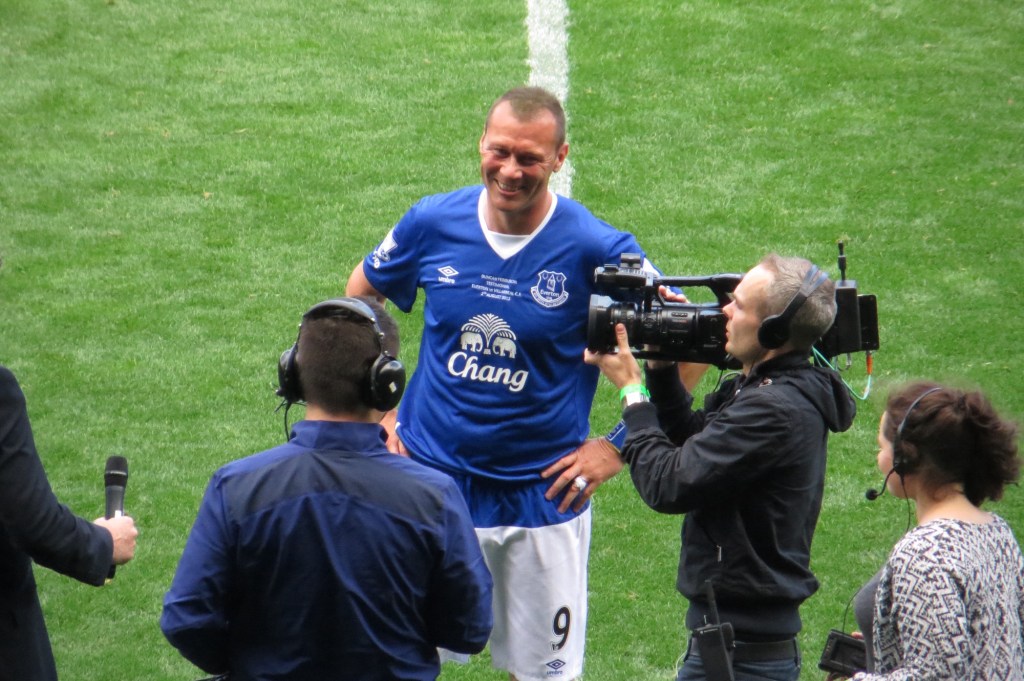
“Duncan Ferguson” by Pete from Liverpool, UK is licensed under CC BY 2.0.
Things did not go to plan at all and Inverness finished in the relegation play off places of the Championship. They lost the playoff final to Hamilton Accies which saw them drop to Scottish League One ahead of the 24/25 season.
Relegation to the third tier of the Scottish game and boardroom upheaval now sees the club grappling with a severe financial crisis.
In the last week, the club has entered administration while the Scottish Professional Football League (SPFL) has issued a 15-point deduction, putting ICT at the bottom of League 1 with -3 points and facing the threat of relegation.
The club has appointed James Stephen, Malcolm Cohen, and Shane Crooks of BDO as joint administrators to oversee an effort to rescue the club by finding new ownership. If no new owners are found, the club’s assets could be sold to repay creditors. The goal of the administration process is to stabilise the club, but the financial outlook remains dire. ICT reported a £1.2 million loss last season and anticipates a similar shortfall this year, even excluding restructuring costs related to last season’s relegation from the Championship.
Now sitting at the bottom of the league, ICT faces automatic relegation if they finish last after 36 games. A second-bottom finish would give them a chance to retain their League 1 status through the play-offs, though they would begin next season with a further five-point deduction regardless of their league placement.
The crisis has prompted an exodus from the club, with manager Duncan Ferguson, assistant Gary Bollan, and goalkeeping coach Stuart Garden all departing, along with players Adam Brooks, Cameron Ferguson, Jack Newman, Flynn Duffy, and Wallace Duffy.
However, there may still be hope. Administrators have reported three initial expressions of interest in taking over the club, offering a glimmer of optimism for the Caley Jags’ long-term future. The next few weeks will be critical in determining whether ICT can survive as an SPFL club and rebuild for the seasons ahead.
Featured image: “Inverness Caledonian Thistle FC, home stadium” by aldon is licensed under CC BY-SA 2.0.
 Callum McFadden