
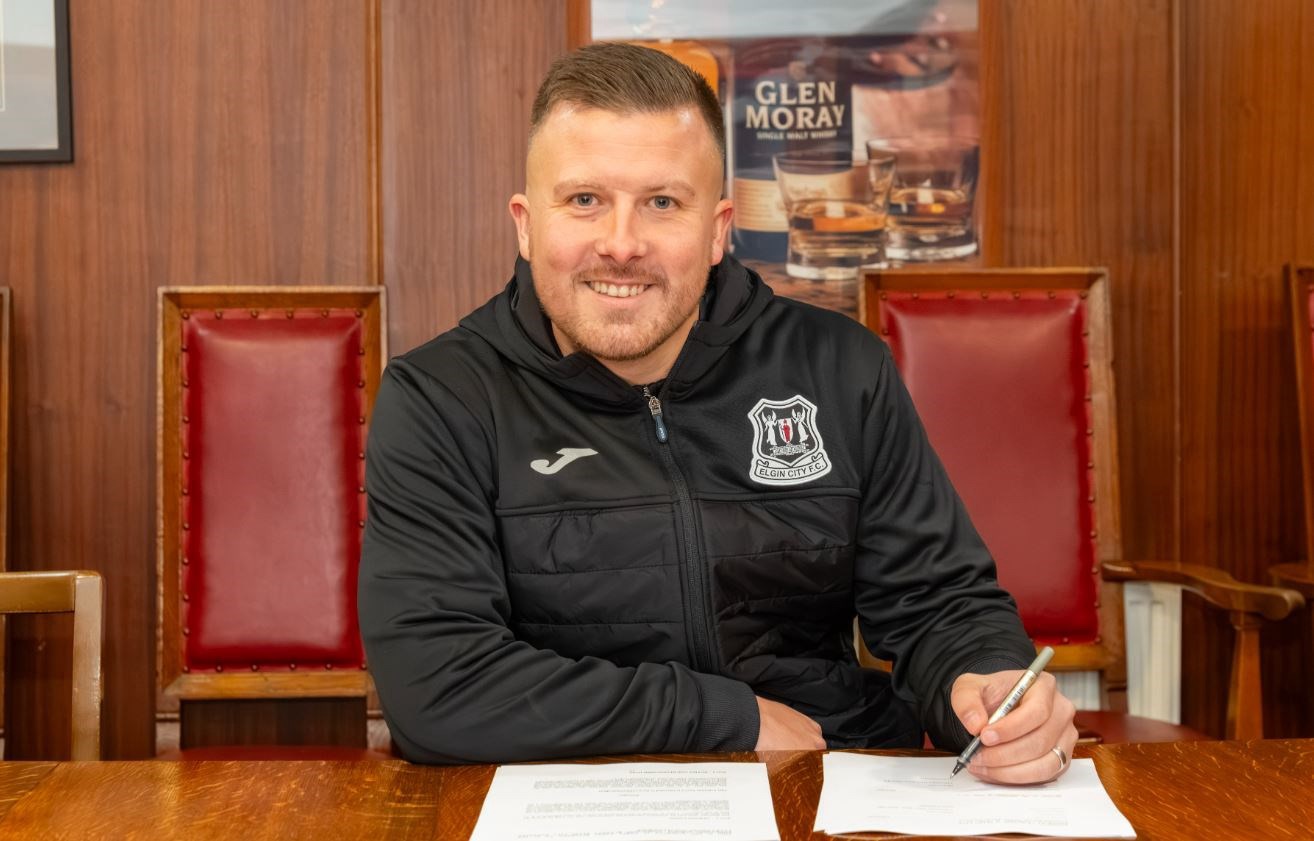
You were appointed as Elgin City manager in December 2023. How do you reflect on the progress made during your tenure to date?
“When I took over, the club was bottom of the league, adrift alongside Clyde, and it felt like a two-horse race to avoid relegation. The pressure was immense – not just to perform but also knowing the potential consequences if we finished bottom and initially it was extremely tough.
“The turnaround has been incredible. To go from that position to finishing 7th and staying up fairly comfortably was a huge achievement. Since then, the progress has been about more than just results on the pitch.
“I must credit the board, in particular chairman Alan Murray, for the work they’ve done behind the scenes to improve the infrastructure around the club. Their efforts have provided a solid foundation to support the football operations, allowing us to create a more professional environment day-to-day and focus on the long-term strategy.
“We have a young team, and our focus has been on creating a positive working culture aimed at developing players. We don’t have the luxury of a large playing budget, so we need to be creative with our signings. It’s essential we bring in people who have a drive and determination to improve and succeed in their careers, as that aligns perfectly with our own beliefs.
“This approach has helped us not only grow as a team but also ensure everyone is moving forward together with shared values and ambitions.”
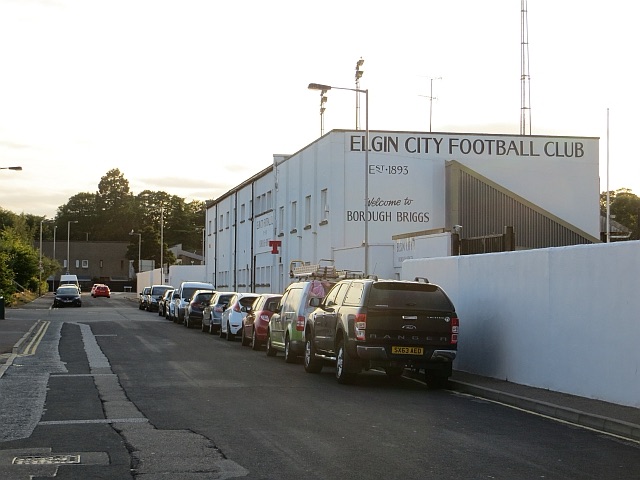
“Borough Briggs – geograph.org.uk – 4113548” by Richard Webb is licensed under CC BY-SA 2.0.
How do you and your assistant, Stefan Laird, approach each week? Do you have specific split responsibilities, or does it vary week to week?
“Between myself, Stefan, and our goalkeeping coach, Gordon Milne, we work very closely as a team of three. It’s a partnership where everyone has a voice, and we complement each other well.
“We share ideas constantly throughout the week, and while we each have our individual strengths, we make decisions collectively to ensure the players are receiving clear and consistent messages. The key is alignment – we know what each of us brings to the table, and we trust one another to deliver in our respective areas.
“Our focus is always on what’s best for the team. Whether it’s training sessions, tactical preparation, or match-day decisions, we work together to create an environment that sets the players up for having clarity on their role and responsibilities for when they step onto the pitch.”
You had a strong track record working in the Highland League as manager of Huntly and Keith, while also previously serving as an assistant at Fraserburgh. How much did you learn from your time working at Highland League level?
“I have to begin by mentioning that my managerial career started at just 24 years old with Maud in the North Region Juniors, and I’ll always be grateful to the club for giving me that opportunity. It was a risk for them, especially at that age, as many wouldn’t consider appointing such a young manager.
“But they took a chance on me, and together, we managed to take the team from second bottom to league runners-up in just 2.5 years, while also reaching four cup finals. That experience was invaluable, and I will always respect and appreciate Maud for shaping my career and allowing me to start so young.
“Following that, Keith took a similar risk when they appointed me as their manager at 27. The trust they placed in me to manage in the Highland League was fantastic, and it allowed me to grow and learn a great deal in a short space of time.
“Those early years gave me the chance to experience the realities of management, how time-consuming, lonely, and pressure-filled the role can be whilst experiencing things and having to manage scenarios you would never have envisaged you have to experience in football. I’m thankful for the opportunity to make mistakes early on, as those lessons have proven essential in shaping the manager I am today.
“The Highland League is a tough, competitive environment where you have to be adaptable and resourceful, and that’s something I’ve learned to embrace. It taught me how to maximize the potential of my squad and make the most of every training session, focusing on making those incremental improvements that ultimately lead to better performances.
“More importantly, my time in the Highland League allowed me to refine the type of culture I want to create within a team. It helped me identify the personalities I want to work with and the type of people I want around me to ensure we’re fostering the best possible environment for the players.
“Ultimately, I owe something to each club I’ve worked with, regardless of whether the experiences were positive or negative. Every role has taught me something valuable and helped me refine who I am as a manager today. Those formative years have been essential in preparing me for the challenges of the SPFL.”
Yourself and Calum Elliot are two of the few managers who have been given the opportunity to move from a Lowland or Highland League club directly to an SPFL club. Do you believe there are more managers at that level who would merit an opportunity in the SPFL in future?
“The SPFL can sometimes be seen as a closed shop, as historically it’s been difficult for lower league managers to be given the opportunity to step up.
“However, Calum has done an outstanding job at Bonnyrigg under difficult circumstances, Michael McIndoe similarly at Edinburgh City and Dougie Samuel has also done a remarkable job at Spartans where they almost got promoted to League 1 last season, so it shows there are many talented managers operating within the lower leagues.
“I do see that more clubs are beginning to recognise the value in giving managers from the lower leagues a chance, and I hope that trend continues. There’s a lot of talent out there, and with the right opportunity, these managers can make a significant impact in the SPFL.”
What are your aims for the rest of the season with Elgin and for your managerial career in the coming years?
“For the rest of the season, the focus is on maintaining our standards and pushing to achieve our objectives. We’ve put ourselves in a good position, but the league is so tight, and there’s little room for error. The goal is to finish as high as possible and ensure we’re in contention when it matters but everyone is capable of everyone, and each team is strong, so we have to maintain the consistency shown so far.
“Looking ahead, I want to keep developing as a manager, learning and improving. My ambition is to manage at the highest level possible, but for now, my full focus is on Elgin City and helping this club continue to grow and succeed.”
Featured image: Elgin City Football Club
 Callum McFadden