

In the later stages of your career, you transitioned into management with Forfar, and since then, you’ve been involved in coaching at Kilmarnock.
How do you reflect on your journey since leaving Forfar, both in terms of your time away from the senior game and your ongoing involvement in coaching?
“After the role at Forfar, I went into Kilmarnock to continue my development as a coach.
“Obviously, I went into the Forfar position and transitioned very quickly from a player to a player-manager, and I was learning on the job, really. I absolutely loved that first stint and the experiences it gave me.
“But when that came to a halt, it was all about keeping myself busy and putting myself in the best coaching position possible, where I could continue practicing and learning. The opportunity at Kilmarnock came up through my contacts with Tony Docherty and Derek McInnes. A position opened within the academy, and that’s how I ended up there.
“Initially, I was in a Head of Youth Phase role, but a change of circumstances altered my role.
“I then started taking the Under-15s, which then developed into the Under-16s, and eventually, I found myself coaching the Under-18s. So yeah, I’ve been getting a lot of hands-on coaching experience.
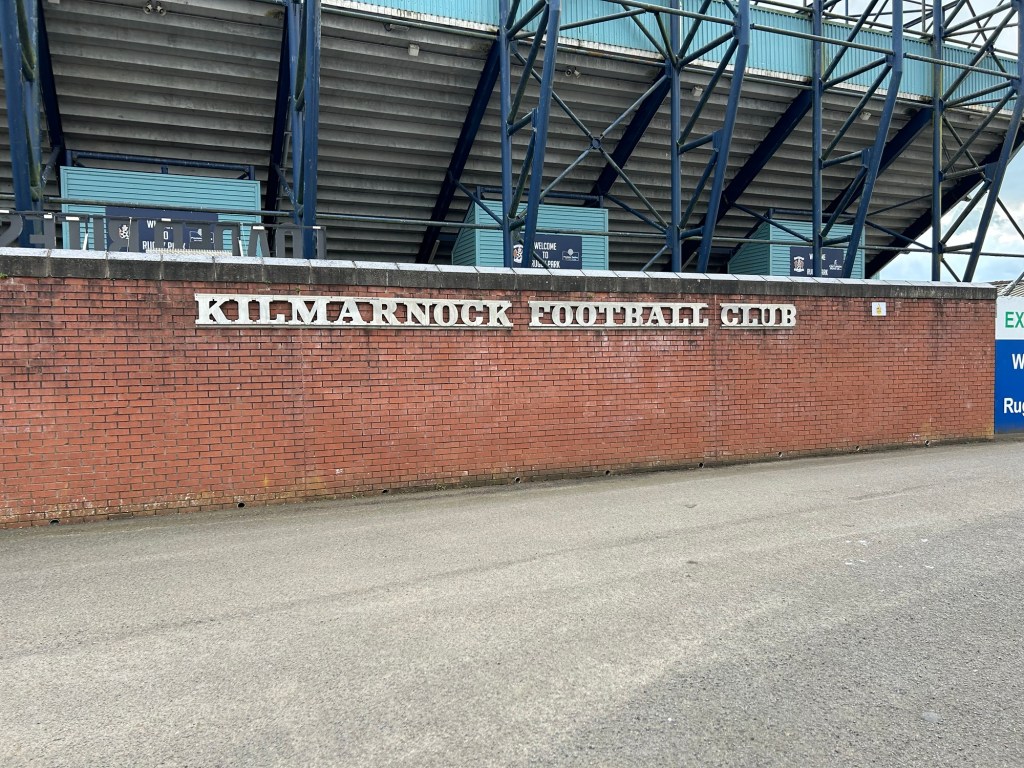
“It’s a great club, and I’m working alongside really good people. I’ve also had some very talented groups. I’ve been fortunate in that way—the last couple of years, I’ve worked with Under-18 squads that are doing very well and competing for the Under-18 league. It’s been brilliant for me in terms of practice, development, and just keeping myself busy with coaching.
“On top of that, something that hasn’t been highlighted as much is that I’ve also taken on an SFA role, which runs alongside my work at Kilmarnock. I help out with one of the SFA Performance Schools, which keeps me busy as well. Again, I get loads of coaching time—coaching every single day at Grange Academy in Kilmarnock, which has been great for my development.”
That sounds like a really exciting role, as you say, tied into what you’re doing with the Under-18s as well.
In terms of the role at Forfar, what was it like working with first-team players while you were still playing yourself?
“I was in a position where I went from player to player-assistant manager, and I had built up strong relationships with the squad I inherited. A lot of players were still under contract, and when I got the job, I wanted to work with those players.
“I started piecing together my squad, and I knew my teammates—I knew their qualities, their characters, and their strengths. But most importantly, I had already built solid relationships with many of them, so I actually found it quite easy to step in, take on that leadership role, and put the team together.
“Obviously, the real challenge was in recruiting my own players and putting my stamp on the squad. I thought I did that really well in the first season—I absolutely loved that process. I think it showed, because we finished second and competed with Kelty Hearts to get into the playoffs. I put together a strong squad, and I felt the group I assembled had the right mix of players I wanted to work with.
“At the start of that first season, we had a few injuries in defence, so I found myself still playing for the first few games. That was difficult, and I knew it would be. During the interview process, I had already touched on that—I was well aware it would be one of my biggest challenges.
“I didn’t go into it lightly. I used all my contacts—people who had experience as player-managers. I had strong relationships with Derek McInnes and Gordon Strachan, who was my manager at Celtic. Early in my coaching journey, when I was at Dundee with the Under-18s, Gordon came in as the technical director at Dundee with a particular focus on youth development. I worked closely with him, and he was someone I called for advice.
“I spoke to experienced figures in the game who had been player-managers and asked for their insights—how hard it was, whether it was doable, and if they would recommend it. Every one of them prepared me for how challenging it would be. I quickly found out that balancing my own game while making on-field decisions and linking up with my assistant and coach for tactical choices was incredibly tough.
“That was probably the hardest part of transitioning from player to player-manager. But I quickly realised I was better off stepping to the side and directing things from there, which I did for the majority of the season.”
You’re clearly enjoying your time at Kilmarnock, working with both the academy and the performance school at Grange Academy.
But with first-team management experience already under your belt—and all before turning 40—do you feel ready to step back into a managerial role if the right opportunity comes along?
“Yeah, 100%. That was always the plan—to put myself in the best possible position to get back into management. I’m keeping an open mind because, in the two years since leaving Forfar, I’ve focused on developing myself as a coach and progressing through my qualifications.
“I’ve secured my UEFA A license and am in the final stages of completing my Youth Elite License. I’ve tried to use this time wisely, putting myself in environments where I’m coaching regularly, gaining experience, and ultimately improving—not just as a coach, but as a manager.
“There have been opportunities, but none have felt quite right. I was offered the Cowdenbeath job—I met with the chairman, but it wasn’t the right fit for me. I also had discussions with Caledonian Braves about a potential role there.
“On top of that, I went through the interview process for Celtic’s Under-18s job, but I fell just short. So, opportunities have come my way, but right now, my focus is on continuous improvement.
“However, I have the desire to return to a full time role within the game and I am open to listening to what clubs have to say. I know that when the right opportunity does come along, I will make sure that I am in the best possible position, with fresh ideas and even more experience to bring to that next role. I’m always looking ahead to the next step.”
Reflecting on your playing career, you came through Celtic’s youth system during a period when the first team was filled with exciting talent and influential figures like Tommy Burns were at the club. How valuable was that experience for your development, and what did you take from it?
“Yeah, I couldn’t have asked for a better upbringing in football. Going straight from school into full-time training at Celtic was an incredible learning experience. Martin O’Neill was building something special, and the squad he assembled was packed with top professionals—Henrik Larsson, Neil Lennon, John Hartson, Chris Sutton, Jackie McNamara.
“Learning behind players of that caliber, seeing their standards every day, was invaluable. We also had fantastic coaches at the academy. Tommy Burns was an unbelievable mentor—he embodied everything Celtic stood for. His standards, his way of speaking, his guidance—it all left a lasting impression on me.
“My direct coaches, like Willie McStay at the Under-18s, were outstanding. We had success, winning the league and the BP Youth Cup, and then I progressed to the reserves under Kenny McDowall. He was more of a first-team-style coach, demanding the highest standards, which was exactly what I needed at that stage.
“One person I always mention is Danny McGrain. As a right-back, I was incredibly fortunate to work with him in the reserves. The little bits of advice, the extra work we did together—it all made a real difference to my game. Looking back, I feel privileged to have had that kind of foundation. It shaped me as a player and set me up for my career.
“I had the best grounding and the best mentors guiding me. After that, you reach a stage where you’re involved in first-team squads, going on pre-season trips, and getting closer to that level. But breaking through at Celtic was always going to be a massive challenge, given the strength of the squad and the competition for places.
“That said, I felt fully prepared when an opportunity came. I had spent six months on loan at Ross County, which gave me a real taste of first-team football. When I returned, I stayed with the first team for most of that season, but as the next campaign approached, St Johnstone came in for me.
“My time at Ross County had shown me what first-team football was all about, and I had to weigh up my situation at Celtic—what was ahead of me and what opportunities were realistically available. At 20 or 21, I knew it was time to step out and properly launch my career. St Johnstone was a club on the rise, and it felt like the right move to establish myself at first-team level.”
You had a successful loan spell at Ross County, winning the Challenge Cup and even scoring in the shootout. That experience set you up for your move to St Johnstone, where Derek McInnes was making his mark as a young manager.
Given his success since, what was he like to work with in those early days, fresh out of playing?
“Yeah, brilliant. I always kept in touch with him—not all the time, but I always felt I had built up a good relationship with him, both as a teammate and as my manager. I like to think he’d say the same. I did really well for him when he stepped into that managerial role, and I ended up being an important player for St Johnstone that year, playing the majority of the games.
“Off the back of winning the Challenge Cup—St Johnstone’s first trophy—we carried that momentum into the next season and won the league. So, I had a really good relationship with Derek McInnes and Tony Docherty. They did great things at St Johnstone, and they continued that success even after I moved on.
“When I later found myself in a managerial position, Derek was one of the first people I’d text or call for advice. He was brilliant, and it was no surprise to me how well he did, just based on how he approached those first few seasons at St Johnstone.
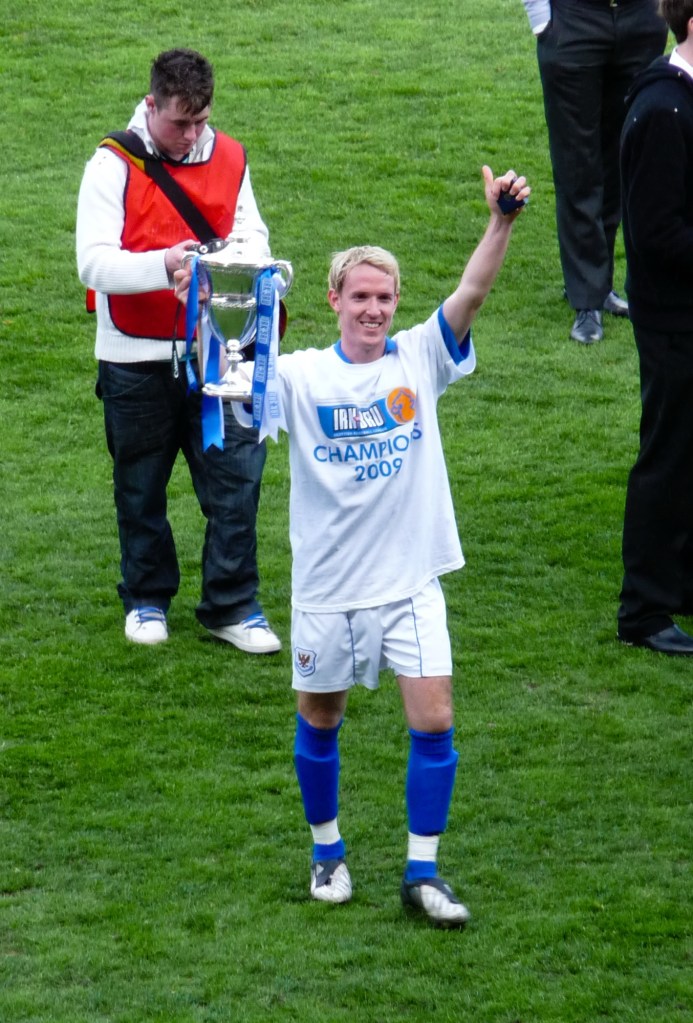
“Gary Irvine (3496273115)” by Ian Dick from Glasgow, UK is licensed under CC BY 2.0.
“When he first took the job, he was still playing, and I think he quickly realised just how difficult that transition was. But as a coach and a manager, he was top-class. His relationship with the players was excellent—great man-management, which is something I always valued. His approach was something I tried to emulate when I got into management myself.
“And Tony Docherty – he’s one of the best coaches in the country. I even felt that back then when I was working with him. So, they were two great people and big influences on the next step of my career.”
During your time at St Johnstone, you played alongside experienced players like Jody Morris and Michael Duberry, who had notable careers in England with clubs like Chelsea.
How did they interact with younger players like yourself, who were still trying to establish themselves in the game?
“Brilliant. Jody was someone I spent a lot of time with away from football as well, but that was just the kind of person he was. He was really focused on building relationships and making sure we did things as a team outside of football.
“Derek always encouraged that kind of team bonding. He wanted us to have lunch together, go out for the day, and just develop that camaraderie. Jody had played with Derek in England, so they already had a strong relationship.
“When he came in, he was one of the most experienced heads, and soon after, he took on the captain’s role. He was the ideal character for it—someone who could bring the squad together and ensure everyone was putting in the effort for each other.
“I got on really well with Jody and still keep in touch with him. We exchange banter here and there, and I’ve even reached out to him for advice, particularly when he was coaching at Chelsea. I have massive respect for him and ended up forming a really strong relationship with him.”
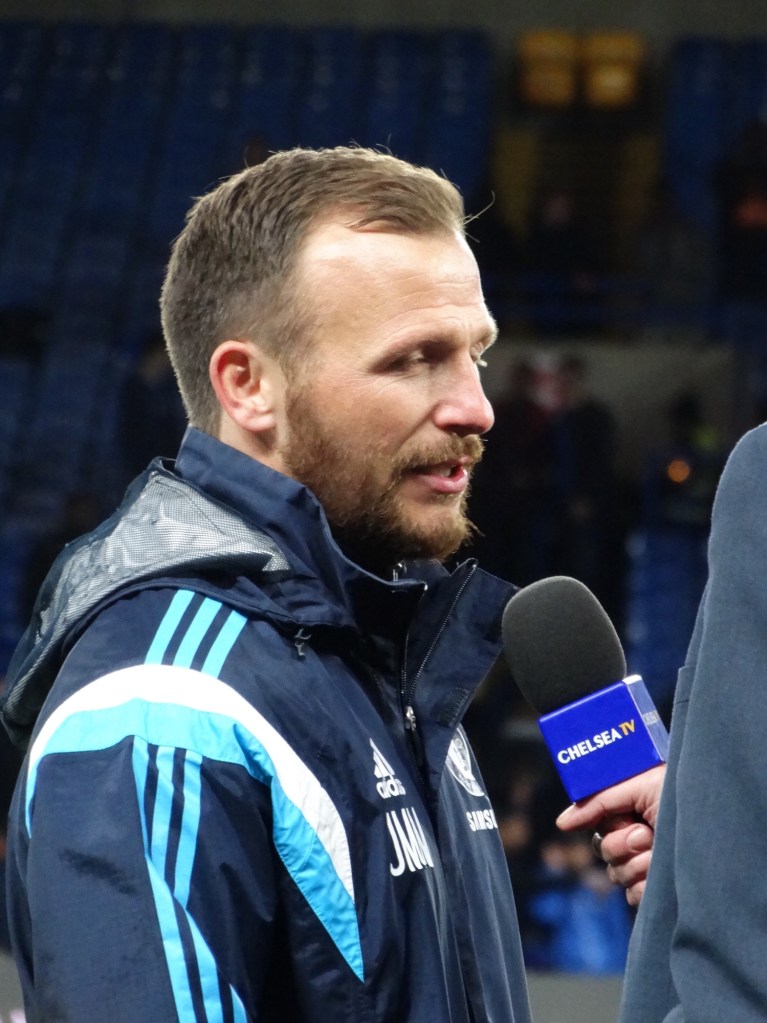
“Jody Morris in 2015” by @cfcunofficial (Chelsea Debs) London from London, UK is licensed under CC BY-SA 2.0.
You enjoyed successful spells with both Dundee and St Mirren, winning promotions back to the Scottish Premiership with each club.
At Dundee, despite facing significant financial difficulties off the pitch, the squad managed to maintain focus and achieve success. How did the team manage to stay focused on football and perform so well in spite of those challenges?
“Yeah, I was delighted to win the Championship with three different clubs, but I always say that the administration season at Dundee was the toughest challenge I faced.
“I had just signed for Dundee when the club went into administration. It was the biggest blow you could experience as a player—seeing the squad get dismantled overnight. I think it was 11 or 12 senior players who were kept, along with a handful of young lads. We had to navigate through the season with whatever resources we had.
“We had trialists coming in and playing their maximum of three games, Neil McCann coming out of retirement, and loads of short-term loans just to keep us going. The club had to do whatever it could to fulfill fixtures and keep bodies in the squad.
“On top of all that, we were deducted 25 points, which was a massive challenge. Some lads lost their jobs, which was heartbreaking. Those of us who remained were the fortunate ones—we still had a wage and the chance to play football.
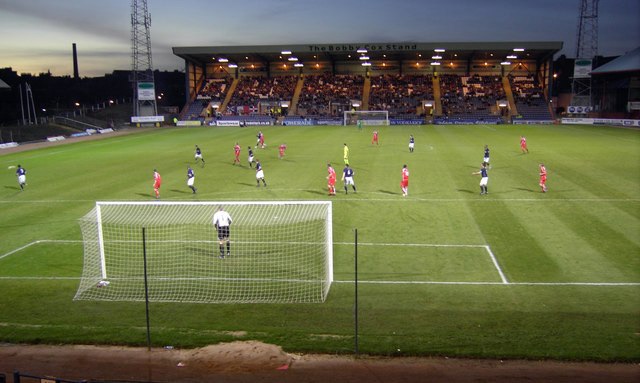
“Dens Park – geograph-1046917” by Colin Kinnear is licensed under CC BY-SA 2.0.
“But we just stuck together. We had to have that never-say-die attitude. The whole club pulled together, and we managed to overturn the deduction. I think we secured survival away to Ross County, and the celebrations that followed were unbelievable.
“Even now, when I go up to Dundee for events, the fans still recognise me as part of that squad. It’s something that means a lot to me because of how difficult that season was. In some ways, I value that achievement more than the three league titles I won. The way we overcame the odds made it one of the biggest highs of my career.”
Finally, Gary, how proud were you to represent Scotland at the Under-21 level especially given many of the young players that you are now coaching will undoubtedly aspire to reach these level one day themselves?
“Yeah, it was a huge honour. As you say, a lot of the young players I coach now aspire to play for Scotland, and part of my job is helping them develop and giving them the best chance of making it as professional players—and hopefully internationals—one day.
“I was fortunate to represent Scotland from the Under-15s all the way through to the Under-21s, so I know what it takes. I understand the sacrifices you need to make, the attitude you need to have, and the hard work required to reach that level. That’s something I try to instill in young players every day.
“I’ve also been involved in coaching with the Scotland Under-16s, working alongside Brian McLaughlin and other top coaches. Seeing how they prepare and compete against other nations has been invaluable. I can take that experience and bring it back to my players, showing them the standard they need to reach.
“So, yeah, I’m in a great position to help these young players on their journey.”
Featured image: SPFL
 Callum McFadden