

Alan Curbishley’s managerial career is one of the most intriguing stories in English football.
Highly respected for his work at Charlton Athletic, where he transformed a mid-table First Division side into a stable Premier League team, Curbishley was considered one of the most reliable managers in the country. However, after leaving West Ham United in 2008, he never returned to management. This raises the question: why did a manager of such pedigree disappear from the dugout?
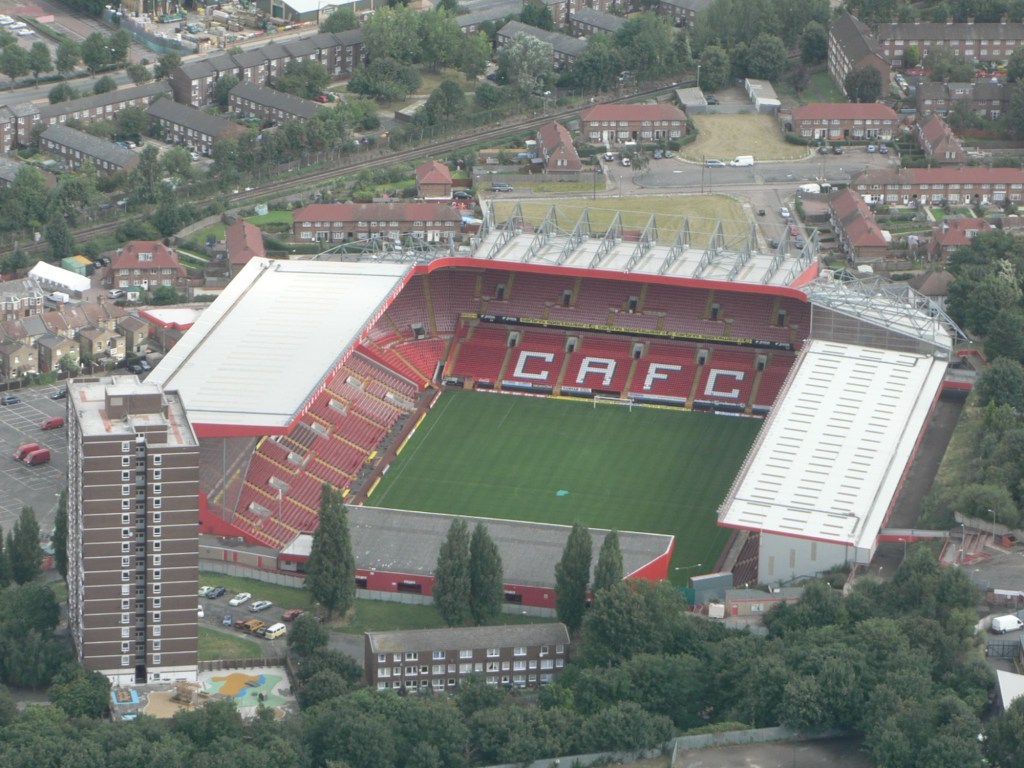
“Charlton Athletic football ground” by Mark Fosh is licensed under CC BY 2.0.
Curbishley’s reputation was built at Charlton, where he spent 15 years, from 1991 to 2006, turning the club into a model of stability and overachievement. His ability to consistently keep Charlton in the Premier League on a limited budget drew admiration across the footballing landscape. After leaving Charlton in 2006, citing a need for a new challenge, Curbishley was quickly snapped up by West Ham United in December of that year.
His tenure at West Ham started dramatically, saving the club from relegation in the 2006-07 season with an incredible late surge, including a famous 1-0 win over Manchester United at Old Trafford on the final day of three season. The following season was less dramatic but stable, with West Ham finishing comfortably in mid-table. Yet, the relationship between Curbishley and the club’s board became increasingly strained.
Curbishley’s departure from West Ham in September 2008 was abrupt and controversial. The key issue was the board’s decision to sell key players, George McCartney and Anton Ferdinand, against his wishes. Feeling that his authority was undermined, Curbishley resigned, stating he could not work under those circumstances. He later won a case for constructive dismissal against the club, a rare legal victory for a manager against his employers, which might have also tarnished his reputation among other club owners.
By the time Curbishley left West Ham, the landscape of football management was beginning to shift. The rise of foreign ownership in the Premier League brought with it different expectations and managerial profiles. Clubs increasingly looked for managers with experience of other top level European leagues or those who could bring a more modern, tactical approach to the game. Curbishley, whose reputation was built on traditional English football values—organisation, discipline, and player management—might have been viewed as a relic of a bygone era, despite being only in his early 50s at the time.
Furthermore, Curbishley’s lengthy stay at Charlton and his departure from West Ham under a cloud might have contributed to a perception that he was either too set in his ways or unwilling to compromise with club owners. His successful legal battle, while justifiable from his perspective, may have also signalled to potential employers that Curbishley would not tolerate interference—an increasingly common aspect of modern football management, especially with the growing influence of sporting directors and recruitment committees.
Curbishley himself has suggested that he wasn’t completely shut out of opportunities. In interviews, he has mentioned that he was approached for several managerial positions but turned them down either because the projects didn’t appeal to him or because the timing wasn’t right.
In the end, the reasons why Curbishley never managed again after West Ham are likely a combination of personal choice, evolving football dynamics, and perhaps a reluctance to re-enter a world that had changed so dramatically. His story is a poignant example of how football, with its relentless pace and demand for constant evolution, can leave even the most accomplished behind.
Featured image: Scott Minto / X
 Callum McFadden