

How do you reflect on your time away from the game since leaving Bonnyrigg Rose in 2024 – both in watching matches and preparing for your return?
“I’m not going to lie—it was incredibly tough. Leaving the club was hard, especially after such a long and successful affiliation. Considering where we came from—leaving the juniors, moving into the East of Scotland League, and climbing through the pyramid system—it was a difficult transition. I found it really hard to take and even harder to adjust to.
“Even now, I still feel a bit lost on Saturdays, Tuesday nights, and Thursday nights when I’d normally be involved in football. Being out of the game is tough. Watching matches isn’t the same as being actively involved, but it keeps you connected. I have been producing match reports for Spartans and I’m really grateful to Dougie Samuel for that.”
“It’s been a huge adjustment. When I moved into full-time football, I transitioned straight into part-time football, and that’s been my life for the last 25 or 26 years. Those training nights and matchdays were part of my routine, so stepping away has been difficult.
“I’ve probably had itchy feet for the last couple of months, thinking about getting back into management, but the right opportunity hasn’t come along yet. I’ve had a few offers and was interviewed for a League Two job but it didn’t happen. So, I’m just waiting for the right opportunity. There have been a few approaches, but nothing that has felt like the right fit.”
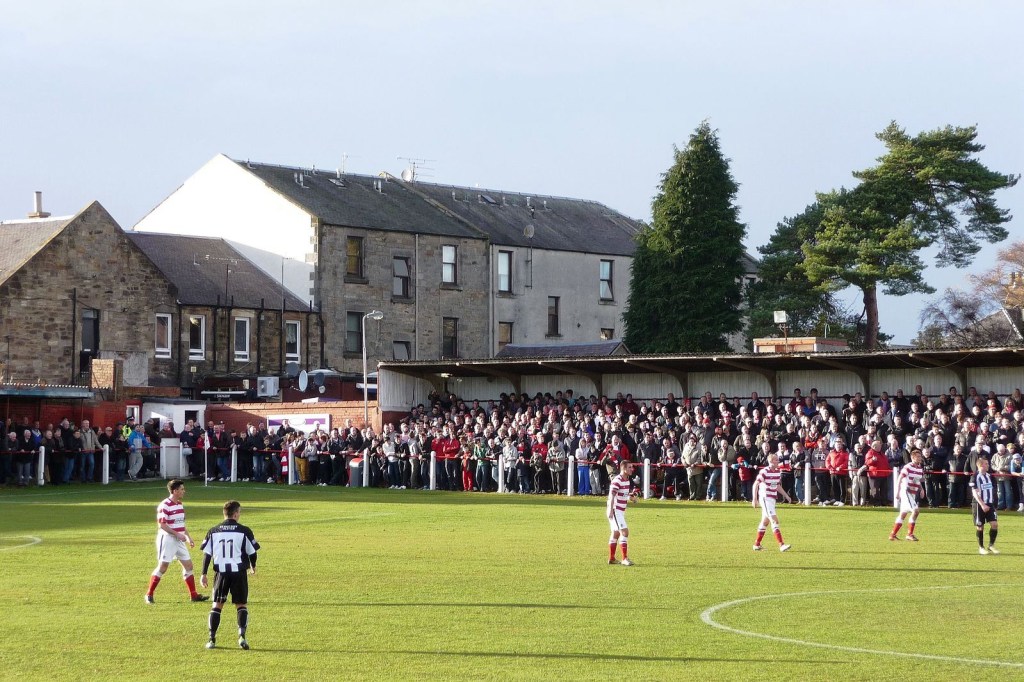
You had two spells as manager at Bonnyrigg Rose—first in the juniors from 2015 until 2017 and then returning in 2018 with the ambition to build the club into an SPFL side.
Can you talk me through the journey of that transition, from a taking the club into revitalised pyramid set up to securing and establishing SPFL status?
“That was the aim when I returned. When I first left, Bonnyrigg was still in the juniors. We had seen teams like Kelty Hearts make the switch to the East of Scotland League, paving the way and showing a clear pathway forward.
“One of the main reasons I left for Berwick was because I wanted to manage in League Two. The juniors didn’t offer that same opportunity for progression for managers at that time as the pyramid does now.
“When I went back, the goal was clear for me—get Bonnyrigg out of the East of Scotland League and into the SPFL. That was my personal ambition. We won the East of Scotland League in dramatic fashion through the playoffs—unforgettable game for everyone. We were 2-0 down away to Broxburn in the second leg, down to ten men, and yet the boys showed incredible character to come back, as they always did, equalise, and then win 3-2. That secured our place in the Lowland League.
“Then came the COVID seasons, where we competed alongside Kelty Hearts, East Kilbride and BSC. To be honest, I think we could have won the league one of those years, but COVID disrupted everything. Kelty got promoted, and while I was delighted for them, it also gave Bonnyrigg a better chance of going up the following season.
“The pyramid system is great because it gives ambitious clubs a pathway, and Kelty set the tone for teams making the transition. Seeing them reach League Two was great. I do believe though that system has to be more fluid throughout and that we have a bottleneck going into League 2, winning your league should mean automatic promotion and finishing last should mean relegation.”
“When our opportunity finally came, I knew it was our best chance to get out of the Lowland League. The league has been getting stronger—East Kilbride, for example, has been really competitive in recent years. But that season, I looked at the teams and felt it was our time.
“The playoff matches were tough—especially against Fraserburgh. We had to play two really hard games against them and then go straight into another set of playoffs against a League Two side. Fortunately for us, our first-leg performance at home against Cowdenbeath put us in a strong position, and we just had to see it through in the second leg.
“It was an unbelievable journey—the crowds, the atmosphere, and the support were incredible. Those are memories that will last a lifetime, both for me, the staff, players and for the Bonnyrigg supporters.”
Making the step up from the Lowland League into SPFL League Two, what was that like from a managerial perspective?
“It is very tough for clubs because I actually think that the gap between the Lowland League and League Two has grown, largely because League Two clubs are now spending more money to avoid finishing in 42nd place.
“You only have to look at last season—everyone thought East Kilbride would get promoted against Stranraer, but it wasn’t that simple. The teams fighting at the bottom of League Two are battling for their survival, and that mentality makes a difference.
“When I managed Berwick in 2017-18, the financial situation was different. Now, the money in League Two is significantly higher, and some teams are spending way beyond their means. This season has seen a lot of teams asking for funding from their supporters.”
“Teams that drop down, like Albion Rovers, East Stirlingshire, Cowdenbeath and Berwick, have found it incredibly hard to come back. Once you go down, there’s no guarantee of coming back up. That fear is driving clubs to spend more than ever.”
Given your experience at Berwick and taking Bonnyrigg through the leagues, do you feel that experience would make you a strong fit for a League Two club?
“I’d like to think so. We had Bonnyrigg punching above their weight through the Juniors, East of Scotland, Lowland League & Scottish Cup games over the years. When we entered League Two with Bonnyrigg, we had one of the lowest budgets—alongside Albion Rovers and Stranraer. Albion went down that season, and we struggled along with Stranraer as well.
“The second season, we knew we had to spend a bit more, but it was still tough to compete financially with other teams in the league. This season Bonnyrigg have invested more money in players and have picked up a reliable goal scorer, which is crucial at League Two level.”
“I faced the same issues when I was manager at Berwick. I would just like the same opportunity on a level playing field. I think my record over the years at Bonnyrigg speaks for itself and what we achieved was special, but you are just hoping that a club is willing to take a chance on you.”
For those unfamiliar with your teams, how would you describe your managerial approach?
“At Bonnyrigg, we built success on team spirit and togetherness throughout the club. Many of the players were local—guys from Midlothian and Edinburgh—so there was a natural bond within the squad. I was lucky to have a great coaching staff behind me, who I trusted, throughout my time at Bonnyrigg, training was always enjoyable for the players but they also worked hard. I like to man-manage my players, understanding their different personalities, build relationships and get the best out of them. At Bonnyrigg I felt like the players would give me everything and they knew I would do anything for them too. We had some big characters but also really good players and a few of them could have played at a higher level than they did but no one really wanted to leave due to the environment we created.”
“We played with a pretty consistent shape that suited our squad, and that stability was key. But when we reached League Two, we had to adapt, and that became a transitional period. I remained loyal to the players who got us there as they had remained loyal to me and club over that time too, but eventually, changes were needed to compete.”
Finally, Robbie, are you focused on returning to League Two, or would an ambitious club further down the pyramid interest you?
“I’m open to anything, but it has to be the right fit. I’ve had offers from East of Scotland and Lowland League clubs, but they weren’t the right opportunities. If I were to drop down, it would have to be with a club that has real ambition.
“Ultimately, I want to work at the highest level possible or have the chance to build something again—like we did at Bonnyrigg. What we achieved as a club was fairytale stuff and sometimes it’s easy to forget that.”
Featured image: Bonnyrigg Rose Football Club / Joe Gilhooley
 Callum McFadden
