

As Dundee prepare to appoint a new manager, it is my understanding that Shaun Maloney is one of the names under consideration for the vacancy at Dens Park.
His managerial career to date has shown that he has a track record of navigating tough circumstances while holding a clear vision for of how he likes his teams to play.
Fresh from a successful and testing spell at Wigan – where he proved his ability to thrive under pressure, develop young talent, and balance the books – Maloney looks ready for his next challenge.
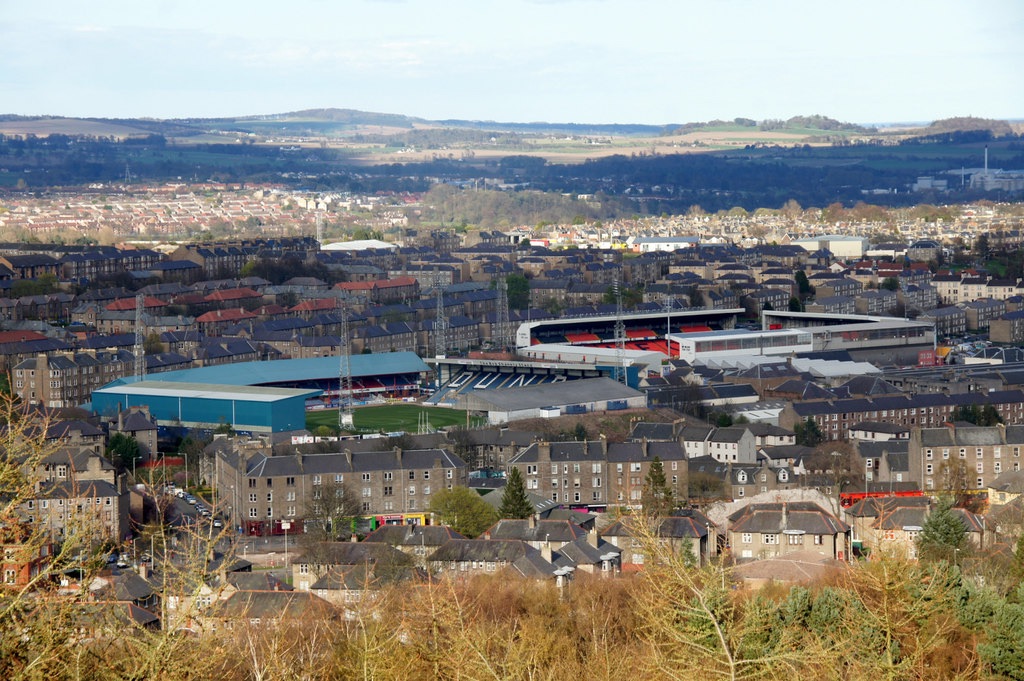
“Dens Park and Tannadice Park from Dundee Law (geograph 3933382)” by Mike Pennington is licensed under CC BY-SA 2.0.
For Dundee, a club with top-six ambitions and a clear desire to establish themselves firmly in the top half of the Scottish Premiership, Maloney is a manager who has shown tactical intelligence, a youth development-focused mindset, and an ability to operate under financial constraints while still delivering results.
The Dark Blues will have competition should they wish to install Maloney as their new manager because it is my understanding that he is on the shortlist at an ambitious English League One club looking to return to the Championship next season, while also exploring a strategic role with a club in the Middle East.
However, it’s understood he would be very keen to speak with Dundee should the club make an approach.
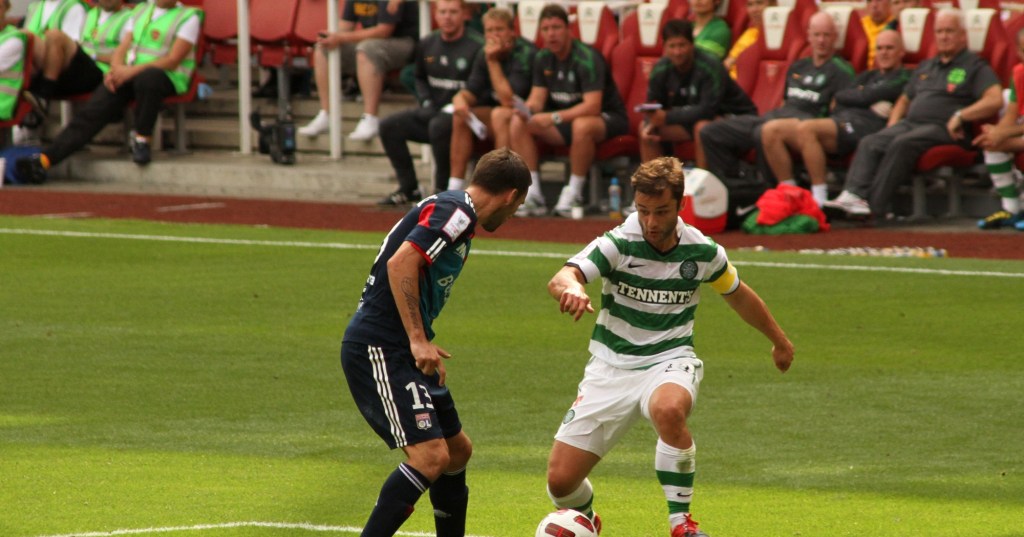
“Anthony Réveillères & Shaun Maloney” by Ronnie Macdonald is licensed under CC BY 2.0.
Maloney’s journey in football has been rich and varied. He joined Celtic as a trainee in 1999 and made his first-team debut in 2001. Across two spells with the Hoops, he scored 37 goals in 138 appearances, winning five Scottish Premier League titles and three League Cups.
In between, he spent 18 months with Aston Villa before returning to Parkhead, and later enjoyed stints with Wigan Athletic, Chicago Fire in the MLS, and finally Hull City, where he ended his playing career. On the international stage, Maloney earned 47 caps for Scotland and scored seven goals.
Following retirement, Maloney moved into coaching in 2017 with Celtic, before taking on a prominent role as Assistant with the Belgium national team in 2018 – working alongside Roberto Martínez during 3 and half year period in which Belgium held the FIFA Number 1 ranking.
He was appointed manager of Hibernian in December 2021, but his tenure was short-lived, ending in April 2022. However, his ideas and coaching pedigree remained highly regarded. In fact, he was in discussions to become Dundee manager later that year, but a deal could not be finalised at the time.
Maloney returned to Wigan – where he had previously played – in January 2023, taking on a managerial role that would challenge even the most seasoned of coaches as the club was on the brink of liquidation.
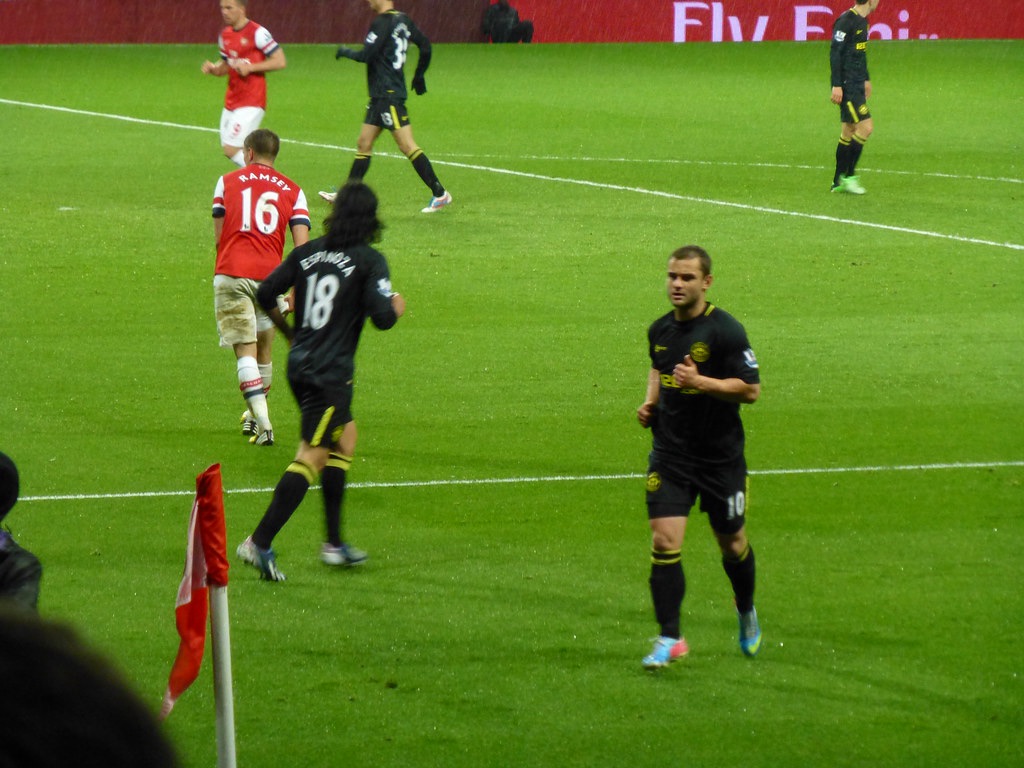
“Shaun Maloney” by wonker is licensed under CC BY 2.0.
The Latics began the following season with an eight-point deduction and a transfer embargo and had just come off a season in which they posted an £17m million loss.
Yet under Maloney’s leadership, Wigan not only secured League One survival but finished in the top half and managed to cut losses to a point where in the season 2024/25 they will turn a profit.
This financial turnaround was driven in large part by Maloney’s commitment to developing young talent. He oversaw the rise and eventual sale of academy products Charlie Hughes and Theo Asgaard, who were transferred to Hull City and Luton Town respectively for a combined fee of over £7 million. It was a remarkable display of how a club can thrive by investing in youth and smart recruitment.
On the pitch, Maloney’s Wigan side went on an vital FA Cup runs in both seasons that ended only at the hands of Premier League opposition in Manchester United and Fulham further underscoring his ability to motivate and organise his team against team with far bigger resources.
It will be interesting to see what materialises in the coming days and weeks ahead but given his experience and desire to succeed in management, Shaun Maloney could be the right man to lead Dundee into a new era.
He would bring a deep understanding of Scottish football, valuable lessons learned from his time at Hibs, and a growing network of contacts across the UK and abroad.
At Dundee, he would find a club with ambition, and in return, they’d gain a manager equipped with vision, experience, and the hunger to build something lasting.
 Callum McFadden