

You made a life-changing decision to move to Canada during your playing career in 2023 and you still remain there to this day where you are an assistant coach at Valour FC.
What has the transition from player to coach been like for you in Canadian football?
“It has been an incredible journey for so many reasons. I first made the move to Canada in 2013 as a player and then once I retired, a coaching position opened up and I was offered it. Like with any big decision, you hope you’re making the right one. But a lot of the time, it’s really about the situation you’re in and making the most of it.
“My wife and I are the kind of people who aren’t afraid of change if we believe it’s for the best. And even if we end up in a situation that maybe wasn’t the right one, we still do our best to make it work and see where it leads us.
“I absolutely love being a coach. Nothing will ever beat playing, of course. That’s the pinnacle of the sport in my opinion: being out on the pitch, sharing the changing room with your teammates, the banter, the energy, the physical grind nothing compares to that. That feeling you get from scoring a goal is something that you never experience that the same way again once you’re a coach.
“But I haven’t regretted the decision one bit since retiring. Maybe I had another year or two left in me, but the timing felt right. I wanted to go into coaching after my playing career to see if I actually enjoyed it and thankfully, I absolutely do. I’m learning every single day. That’s what I love most: being in a place, and in a job, where you’re constantly learning. Just when you think you’ve figured something out, suddenly you realise, ‘Hang on a second, I need to learn that all over again.’
“So, for me, it’s been fantastic. I’m happy with where I am in life and where I am in my career. I’ve made the most of it so far, and I’ll keep trying to do that moving forward.”

“Canadian Premier League official match ball (photo by Djuradj Vujcic)” by Djuradj Vujcic is licensed under CC BY 2.0.
In terms of the Canadian Premier League, the current format of the league is relatively new in comparison to leagues that you’ve played in in the past, which of course we’ll come to. How would you describe the standard of the league?
“The standard of the league is strong and as a product, it is growing very well. The standard is actually much higher than what some people may think. It’s much higher than what it was when I first came in. I came in the second season that the league started, and it’s grown dramatically since then. Even the infrastructure, player salaries, things like that – it has all grown. And that’s it – you have to continue on the upward curve.
“Now the league has started to sell players, which is testament to the development of the players within the country. Already, I can see there are at minimum five young players in the league that I have a good grasp are going to be sold within the next year or two. We play against them, or they’re playing for us, and I’m like, ‘Okay, this kid’s going to go to Europe,’ or ‘This kid’s going to go to MLS and be bought for money.’
“So, in all aspects, there’s a lot of work to do within each club and within the league in general to continue the growth. But so far, the work that’s been put in from the league level and from the club level has been fantastic.”
You were born in Northern Ireland, but you had your first experiences of professional football in England – at Portsmouth while they were in the Premier League.
From there, you also had a loan spell with Bournemouth. How do you reflect on your time in English football?
“Those experiences really forced me to grow up quickly. At 16, straight out of school, I was doing pre-season with Portsmouth. Up until then, like most teenagers, I’d been living at home with everything taken care of by my parents. But once I made that move, suddenly I had to open a bank account, manage life on my own, and become independent so it was a steep learning curve, and it accelerated my maturity.
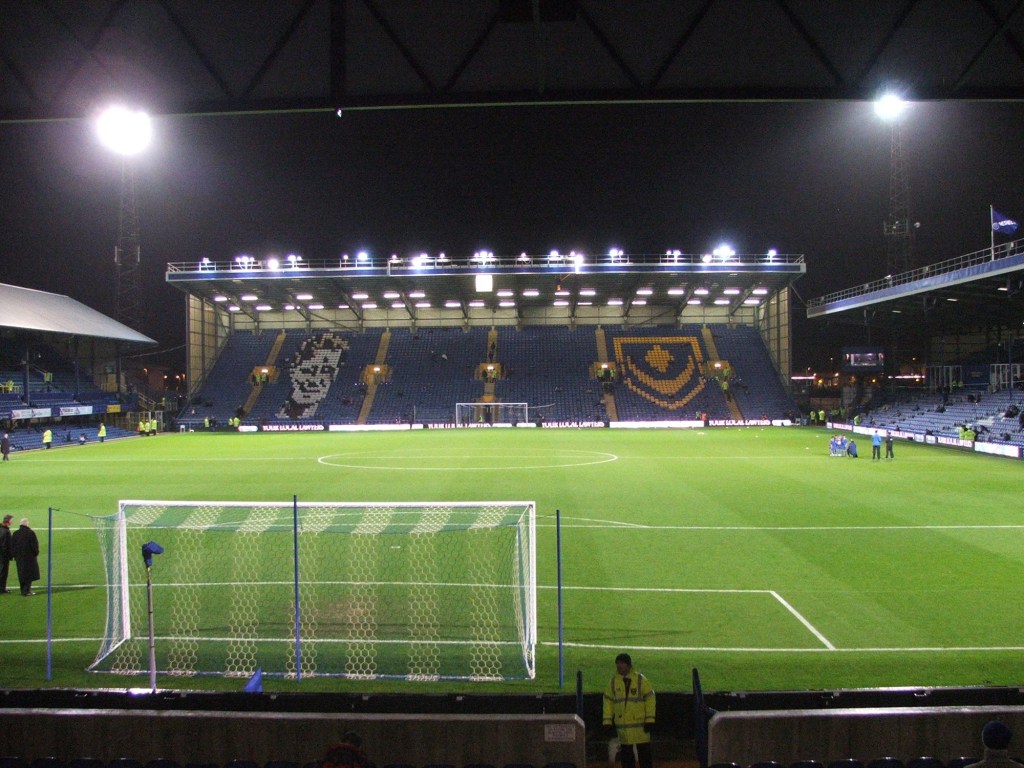
“Fratton Park inside” by Ben Hardinge is licensed under CC BY 2.0.
“Being part of a Premier League environment at that age gave me a real insight into the standards required – not just on the pitch, but in everything. The quality of the players, the professionalism, the day-to-day attitude… it all had to be top-level. You quickly realise there’s no such thing as taking a day off if you want to reach the highest level, whether it’s in football, coaching, or any kind of profession. That mindset was instilled in me early.
“Then going out on loan to Bournemouth and playing more competitive football brought another layer of growth. It was no longer just about talent – it was about being resilient, looking after myself, learning how to adapt. That experience fast-tracked my development and maturity.
“By the time I was 26 or 27, I felt like I had the experience and mindset of a 30-year-old. I’d already played in high-pressure situations, learned what it meant to be consistent, professional, and reliable. Those early challenges really shaped who I became, not just as a player but as a person.”
When you returned to Northern Ireland, you joined Glentoran and went on to make over 200 appearances for the club. You were also part of the last Glens side to win the Irish League title which is a remarkable fact, considering the stature and history of the club.
Looking back now, how do you reflect on your time at Glentoran, both personally and professionally?
“It was actually Alan McDonald, who was the assistant manager of Northern Ireland’s under 21 squad when I was in playing in that group at the time – who then went on to become manager of Glentoran – who brought me to the club. He’s one of the best people I’ve ever worked with and one of the finest coaches I’ve known. When I arrived, I quickly realised the standard was higher than I’d expected. Coming from a Premier League environment, I recognised that Glentoran had some very talented players.
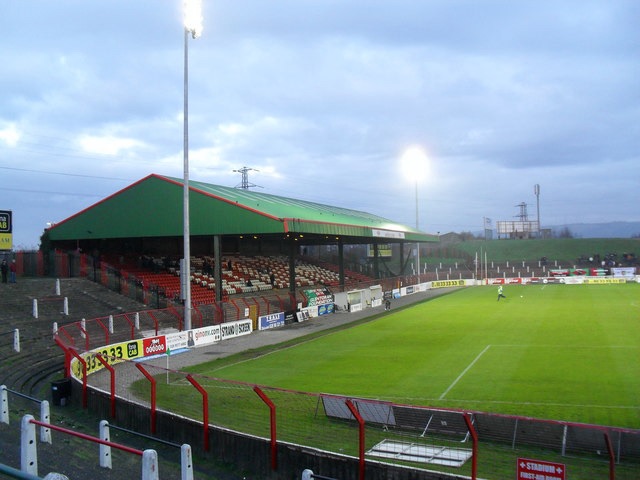
“File:The Railway Stand at The Oval – geograph.org.uk – 1599414.jpg” by Dean Molyneaux is licensed under CC BY-SA 2.0.
“I had offers from a few other Irish League clubs around that time, and some of them were offering more money than Glentoran. Linfield weren’t in the picture then – if they had been, I probably would have jumped at the chance immediately. But they weren’t. I even asked a former Northern Ireland under-21 teammate who was playing in the league for advice, and he told me straight: ‘If you want to win trophies, sign for Glentoran. If it’s about money, go elsewhere.’
“For me, it was simple. I’m in this game to win trophies and create memories to look back on rather than just for the money because when you grow up loving football, it’s about passion and success.
“So, I signed for Glentoran, and those four years were incredible. We had a fantastic team and coaching staff. I won the league, the League Cup, the County Antrim Shield, and we reached the final of the Setanta Cup. It’s remarkable that such a historic club hasn’t won the league since.
“I remember that league-winning day vividly. No matter which team I played for, whether it was one I didn’t grow up supporting or my boyhood club Linfield, I always gave 110%. When I played for Glentoran, I scored against Linfield. When I played for Linfield, I scored against Glentoran. That’s just part of the job. I fought for every teammate and every club I represented.
“At Glentoran, I knew I had to win over the fans, especially after it was revealed I grew up a Linfield supporter. Naturally, some Glens fans weren’t thrilled with that. But I’ve always been able to handle criticism and the pressures that come with professional football – it never bothered me. And when I later played for Linfield, I got plenty of stick from friends for my time at Glentoran.
“Overall, my time at Glentoran was hugely rewarding. We were successful, we had a great squad and staff, and those years remain some of the best memories of my career.”
The rivalry between the Glens and Linfield is the fiercest in Northern Irish football.
Having grown up a Linfield supporter, how did it feel to cross that divide in 2011 and join the Blues?
Was it a straightforward decision when the opportunity came, given your background?
“At the time, everyone knew Linfield wanted to sign me. But I’ve always been someone who believes in seeing a contract through. If I give my word or sign for two years, I want to honour that – unless a move genuinely benefits both the club and me.
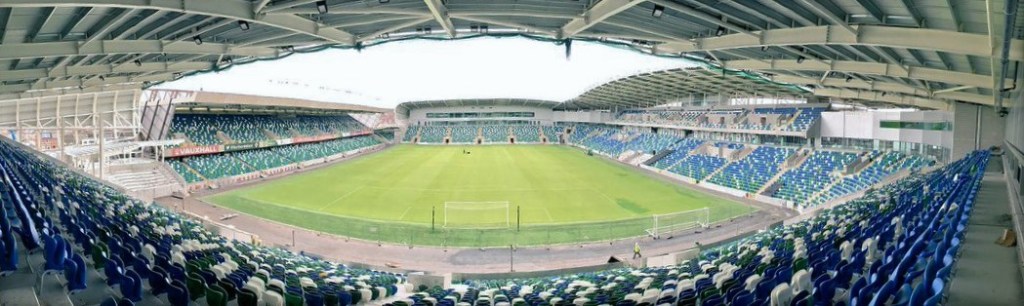
“Windsor Park redevelopment” by Citizen69 is licensed under CC BY-SA 4.0.
“That said, when the opportunity to join Linfield first came up, we couldn’t reach an agreement. Financial and contractual issues got in the way. I had a mortgage to pay, and taking the move then would’ve meant cutting my wages in half. Glentoran would’ve had to cover part of the shortfall, and understandably, they weren’t going to pay me to go and sign for their biggest rivals. It was just a year too early.
“I was on the transfer list that season – I remember it clearly. I didn’t feature in many pre-season games because the club was trying to move me on. But then our two strikers got injured ahead of the opening match. I told the manager, ‘If you need me, I’ll play up front.’ I started as a striker against Lisburn Distillery and scored five goals.
“Straight after the game, the chairman pulled me aside and said, ‘You’re off the transfer list.’ And I replied, ‘Hold on – I still want to make this work. Let’s talk and find a compromise.’ But Glentoran shut it down. Once I was off the list, they had no interest in negotiating. So, I stayed for the rest of the season.
“I’ve never been in the game for money, but the reality is, you still have bills to pay. At that point in my life, I couldn’t afford to risk my house. It was that simple.
“By the end of the season, my contract had expired. David Jeffrey, who was managing Linfield at the time, gave me a call and said, ‘I want to sign you, and I know you’re a boyhood Linfield fan. Let’s make it happen.’ I still had to take a pay cut, but by then my finances were in a better place, and I was comfortable making that move.
“I signed for Linfield and in my first season we won the double. It was everything I’d dreamed of as a kid. If I couldn’t make it across the water to England or Scotland, then playing for Linfield and winning major trophies was the next best thing and I was proud to make that a reality.”
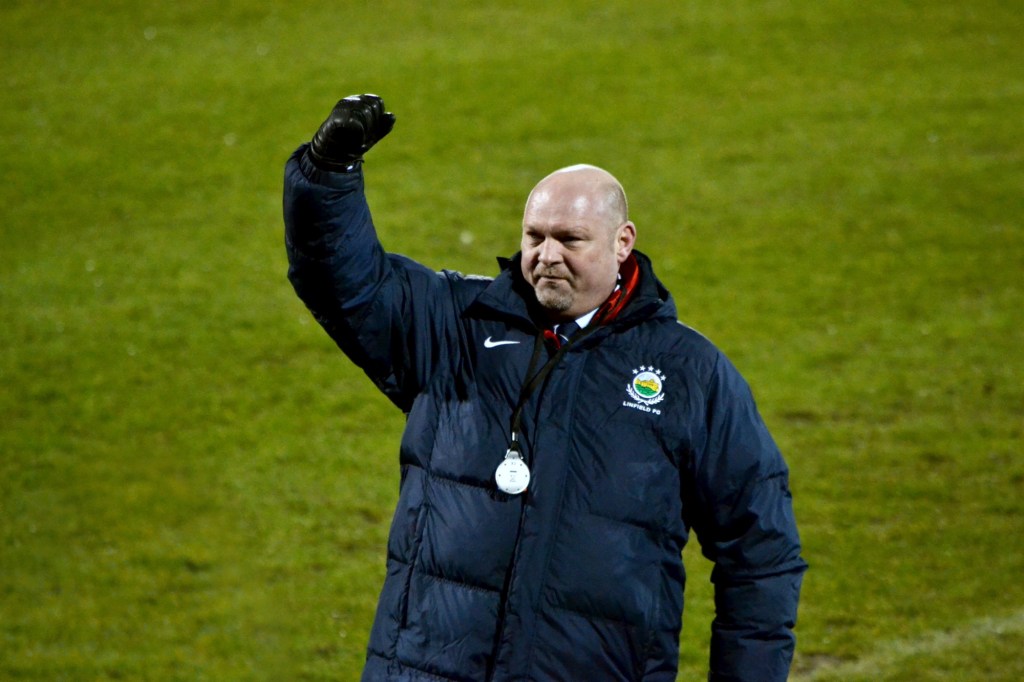
“Linfield vs Glentoran 21214” by Craig Norwood is licensed under CC BY-SA 2.0.
In terms of David Jeffrey, he is one of the most successful managers in Irish League history. What was he like to work with as a player?
“He was great to work with in every sense. Although both clubs are massive in their own right, Linfield have much better record than Glentoran when it comes to trophies and success overall.
“Now don’t get me wrong – Glentoran have a great record with the Irish Cup. They love that competition.
“But I always asked myself: ‘What is the real difference between the clubs on the inside? And What separates Linfield from Glentoran in terms of long-term success?’
“Those were the questions I had in my head when I joined the club. And I’ll never forget walking into Linfield for the first time – David Jeffrey had already set the standard so high. The moment he sensed someone easing off in training, it was dealt with straight away.
“He had a way of pushing every ounce of energy out of you, but in a way that filled you with belief. Every time you stepped onto the pitch, you felt like you were part of the strongest army out there. You walked out believing you were the best player on the best team. And that mentality was infectious and every single player was in that mode too.
“Fear wasn’t part of the equation. Playing with your foot off the pedal wasn’t accepted. You always felt you were part of a strong team—physically, mentally, tactically. I remember my first game against Glentoran. Naturally, I expected a bit of stick from the fans. But there wasn’t a big team talk from David. It was more like: ‘Lads, if you’re not fired up for this, you’ll never be fired up.’ He knew we already understood the occasion.
“The real difference, though, came after those big games. When we beat Glentoran, the focus immediately shifted to the next match – regardless of the opposition. It didn’t matter if we were playing the team bottom of the league, the mindset was: job done, move on. At Linfield, the three points were what mattered, not who they came against.”
“But I noticed the contrast when I played for Glentoran. Beating Linfield often felt like a massive achievement whereas at Linfield, beating Glentoran was just business as usual. It wasn’t celebrated any more than beating any other team. That relentless focus made the difference.
“David Jeffrey was also a master at managing energy and motivation. He knew when to push us and when to step back. For example, in a cup final, he didn’t need to shout and scream because we were already up for it. But when we played lower-league teams, where the natural intensity might drop, that’s when he’d fire us up. He made sure no one took their foot off the gas.
“Losing to a weaker side wasn’t just about three points – it could damage morale, hurt confidence, and derail momentum. And he never let that happen. That’s something I took from him as a leader – understanding the moment, knowing when to raise the standards and when to let things breathe.
“The other thing with David: as a player, you always felt protected. If you were out of form or on the bench, he stood by you. He backed you publicly. If one of the strikers wasn’t scoring, he’d tell the media, ‘It’s only a matter of time. He’ll get there.’ You felt safe in that environment. Supported.
“And that safety created strength. You never feared failure, but you also never dared to lower your standards. Dropping your standard was seen as disrespect to the badge, to the fans, to your teammates and to everyone at the club. And that included everyone from the manager to the kit man to the stewards. If you wore the Linfield badge, standards mattered. And that, to me, is what set the club apart.
“That’s why Linfield is as successful as they are and why they continue to be. It wasn’t just about quality players. It was about a culture of excellence that ran through every layer of the club.”
I have to touch on your time at FC Edmonton who were the first club you joined when you moved to Canada as a player in 2013 where you became their all-time leading goal scorer.
You also played alongside and shared the pitch with fellow Northern Irishman and good friend Albert Watson, who captained the team. How proud are you of what you both achieved there, both personally and together?
“I loved playing alongside Albert and I’m incredibly proud of what we achieved together at FC Edmonton. He’s a great friend and seeing him recently sign for Armagh City at the age of 39 just sums him up – he’s an absolute machine. I thought he was going to retire, but he’s still going strong, coaching Larne Under 20’s and continuing to play. He just doesn’t stop.
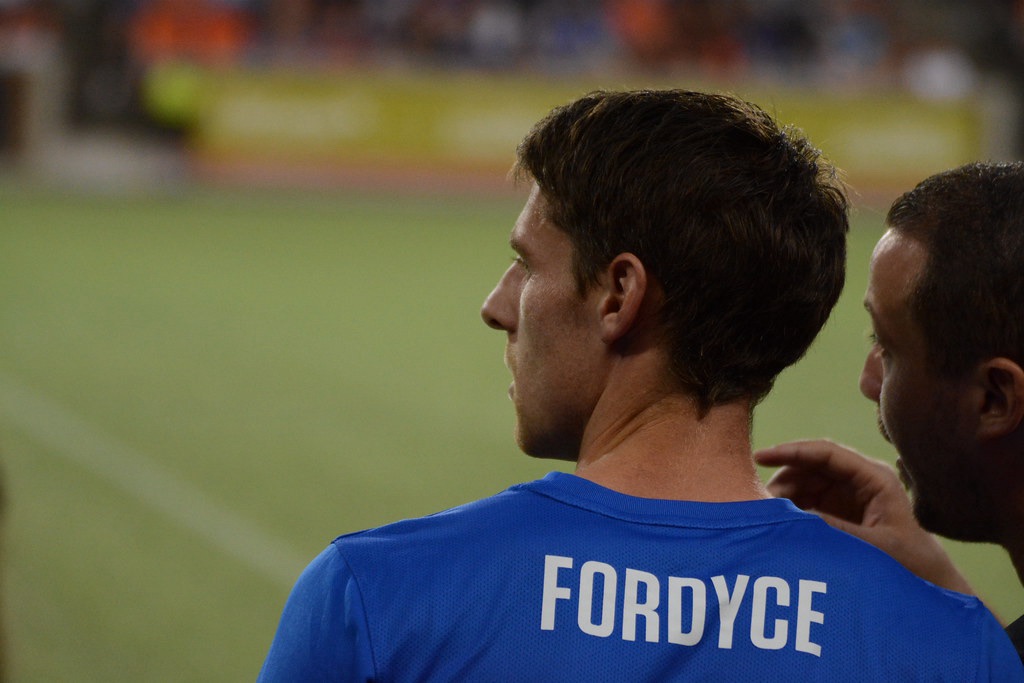
“Daryl Fordyce” by haydenschiff is licensed under CC BY 2.0.
“When we arrived in Edmonton, the standards at the club weren’t where they needed to be. But over time – probably by the second or third year – we built something strong. Albert and I brought a real level of professionalism, and we helped set that tone. We brought in players like Adam Eckersley from St Mirren, Ritchie Jones – who came through the youth system at Manchester United – Tomi Ameobi, Nikolas Ledgerwood, and Matt Van Oekel. That became our core group.
“We were predicted to finish near the bottom – 11th or 12th in what was a 12-team league – but we ended up making the playoffs in our third season, which was a massive achievement.
“We were competing against big clubs like New York Cosmos, Miami FC, and Tampa Bay, with players like Joe Cole, Raúl, Niko Kranjčar, and Giorgos Samaras involved. Some of them were late in their careers, but many were still in their prime.
“Under our manager Colin Miller – who played for both Scotland and Canada – we built a winning culture. Especially at home, we had the mindset that no one was coming in and beating us. Making the playoffs with that team, given where we started, felt like something really special.
“Albert was a huge part of that. As captain, his mentality and leadership were immense. He made me a better player, a better professional and honestly, a better person. He pushed me, challenged me, and helped me grow. I’d like to think I did the same for him in some way. We went hand in hand during that time.
“We haven’t seen each other in about six years, since I was back playing in Sligo, but I can’t speak highly enough of him. He’s going to be a fantastic coach in the senior game. The standards he holds and the way he leads – he’s just top-class.”
Finally, Daryl, looking ahead to the future, do you have aspirations to step into management yourself, or are you content focusing on your current role as an assistant coach?
“Even now, some of the players here still call me ‘captain’ or ‘skipper’ because I was a leader when I was playing alongside them before stepping into my new role as a coach.
“It means a lot to me that they often come to me for advice. That’s something I’ve carried with me from my time at Linfield. One of the biggest compliments I’ve ever received – and something I really value – is when players tell me they feel safe around me, whether it’s on the pitch or in the dressing room. That sense of security is something I try to create, and it stems from the culture we had at Linfield.
“I always think of it like parenting in a way because when people, especially younger players, feel safe and supported, they’re more willing to take risks, to push themselves. Just like kids on a climbing frame – they’ll climb higher if they know there’s someone there to catch them. That’s how I try to approach coaching.
“As for the future, if football leads me down the path of becoming a manager or head coach, it’s definitely something I’d embrace. If the opportunity comes and I apply and I’m fortunate enough to be given the chance, I believe I’d do well. Whether or not I get that opportunity is another matter because, as we know, football can be unpredictable. But I do feel ready for it, and I’ve learned from some incredible people.
“Right now, I’m really enjoying my role as an assistant. I’m on the pitch a lot, hands-on with the players, and that’s my happy place. Even if I do step into a head coach role one day, I’ll always want to stay close to the pitch. That’s where I feel most connected – developing players, shaping sessions, and being in the thick of it.
“It’s a very competitive space, no doubt. To move forward, you have to be excellent at what you do and always look to improve. But if the right opportunity comes along, I’ll absolutely go for it. It’s a challenge I’d welcome and one I believe I’d be ready for.”
Featured photograph: FC Valour
 Callum McFadden