
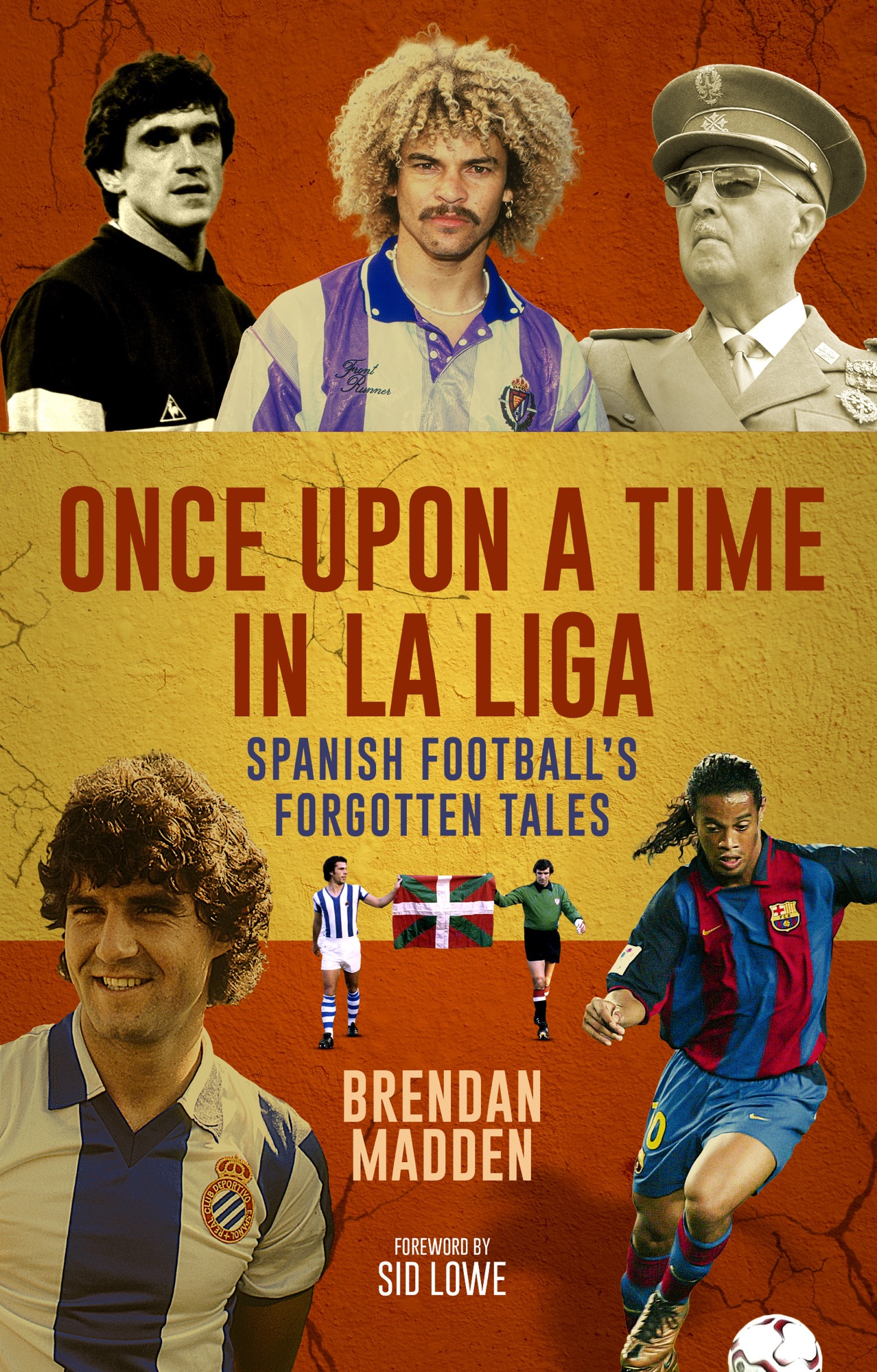
Football isn’t just about goals, trophies and star names. In Once Upon a Time in La Liga: Spanish Football’s Forgotten Tales, Brendan Madden uncovers the extraordinary, sometimes dark, and often forgotten human stories that shaped Spanish football from political repression to espionage and heroic defiance.
We spoke with the Brendan about the origins of the book, the emotional discoveries along the way, and what younger fans can learn from football’s past.
⸻
Your book uncovers many remarkable and little-known stories from Spanish football history. What first inspired you to start digging into these forgotten chapters, and was there a particular discovery that convinced you this book had to be written?
“I’ve had a longstanding connection with Spanish football from working on it from an analytics perspective. When I left that world, I wanted to keep that link alive, so I started experimenting with a bit of writing.
“There’s so much good English-language coverage out there nowadays that I wanted to find stories that were a little different. The first piece I put out as a blog article that gained some traction is actually in the book — the story of Juan Alcorta, a Real Sociedad director who defied an ETA extortion attempt in 1980. It got a really nice reaction from readers, and I found I loved hunting down and researching those kinds of stories — driven by football but often touching on wider themes.
“Eventually, I’d built up a small collection and thought that, with a few more, it might make a book.”
⸻
The book weaves together sport, politics and culture from Franco’s regime to the influence of ETA and Galicia’s cartels. How did you approach balancing football narratives with such sensitive historical and political themes?
“I’ll let readers be the judge of whether the balance is right or not!
“It was something I was very conscious of during the writing process. On the whole, I felt that for most chapters the balance came naturally, though there were one or two where I was mindful to weave the football narrative in a little more to keep that blend right.”
⸻
Some of the tales you tell such as the winger who became a Nazi spy or the players persecuted for protesting sound almost like fiction. Which story surprised or moved you the most during your research?
“Part of the beauty of delving into these stories is that you do tend to feel an attachment or fascination with the people involved, and there were a lot of emotional and touching moments in the interviews. For the chapter on Michael Robinson, I was lucky to speak to three people who were extremely close to him and still clearly miss him. I found that really moving to write.
“I’ve long been fascinated by Canito, who was abandoned at an orphanage when he was young before going on to be a generational but troubled talent who played for Espanyol, Barcelona and Spain. I was very fortunate to be put in touch with someone who grew up with him in that same orphanage. That was a brilliant breakthrough and deeply emotional — to talk to someone who knew Canito so well and was still affected by his tragic later life.”
⸻
You clearly spent a lot of time delving into archives and interviewing those connected to these events. What was the most challenging part of your research process, and did you ever hit a dead end that you had to creatively work around?
“The most challenging part was definitely tracking down people to interview, as it was often very specific individuals I needed to reach. There was a worrying period when I wasn’t sure I could find enough of them to give the book the depth the stories deserved.
“But in the end, I was incredibly fortunate to get dozens of remarkable interviews. The people I spoke to were so generous with their time and memories that they made the writing process so much easier. It was amazing and genuinely life-affirming to talk to them.
“There were a few chapters where it wasn’t possible to find interviewees, but having some that aren’t interview-based actually helps the balance of the book, I think. For those, you have to work a bit harder on the research side — trawling newspaper archives, biographies, or whatever sources can give that extra layer of detail.”
⸻
Your book explores not just the famous names of Spanish football but also unsung heroes and forgotten figures. What do you hope readers – especially younger football fans – will take away from learning about these overlooked individuals?
“Definitely a driving force behind the book was bringing these stories and the lives of such incredible people to a largely new audience – that’s a really nice feeling. And it’s often the main feedback people have given me about the book: how much they enjoyed discovering these characters and episodes they’d never heard of before.
“For younger readers in particular, many of the political and cultural themes show just how much Spain has changed over the last 50 years. The transition to the modern, progressive country we know today was almost unthinkable five decades ago.”
Once Upon A Time In La Liga is available to buy via Pitch Publishing and at all good booksellers.
 Callum McFadden