

You are heading into your third season in charge of Ballymena. How do you reflect on the first two seasons that you’ve been in charge so far?
“I always knew that going into management would be a bit of a learning-on-the-job type of experience.
“The experiences I’ve had from the moment I came in until now have been brilliant. The first season was very, very difficult because the club wasn’t in a great place financially, and we were trying to balance the books in that first year. I learned a hell of a lot. It was actually very enjoyable, even though we literally stayed in the league by the skin of our teeth in the playoff game. I probably learned more that first season than I’ll ever learn again.
“Last year was about trying to build on that and gain a bit of momentum. We were able to bring in better quality players, just by virtue of staying in the league and getting ourselves back on a more stable financial footing. We had some tough moments too such as losing our first four games, then going on a run of twelve wins, followed by losing our next six or eight, I think it was. So it was definitely up and down.
“But overall, there were a lot of positives. We didn’t finish the season the way we wanted to, but looking at it from a budget perspective, I think we ended up pretty much where we were expected to.”
How are you feeling about that forthcoming season?
“I am looking forward to it, like I’ve said before, we’ve signed well and more importantly, we’ve signed sensibly. I know there’s been a lot of talk outside of Ballymena of ‘They’ve got this, that, and the other’ but the truth is, we’ve kept it grounded. We haven’t gone overboard with any of the signings we’ve made.
“We’ve spoken to a lot of players, both in and out of contract, and some of them have demanded a certain level of money. But that’s just not something we were willing to stretch to. We were clear from the start that we wanted to make sure we could afford what we were paying out. We weren’t going to take financial risks, especially given how the club had been crippled by that kind of decision-making in the past. We weren’t prepared to go down that road again.
“The players who have come in have really bought into what we’re trying to build here at Ballymena. They understand the vision, and they want to be part of it and that’s how we’ve managed to bring them in.
“Now, yes, some of the signings are big names – in terms of being bigger than we’ve had in the past – and with that comes expectation. That’s something we’ll need to manage properly. It’s up to us to meet those expectations and deliver on what we’re aiming to do.
“The season’s just two weeks away now, and things have been building nicely. The next step is seeing if what we’ve been working on in training can be applied in a match setting. Pre-season isn’t about results. It’s about developing the right mentality, establishing a clear style of play, and preparing for the real stuff in a couple of weeks’ time. That’s when we want to hit the ground running.”
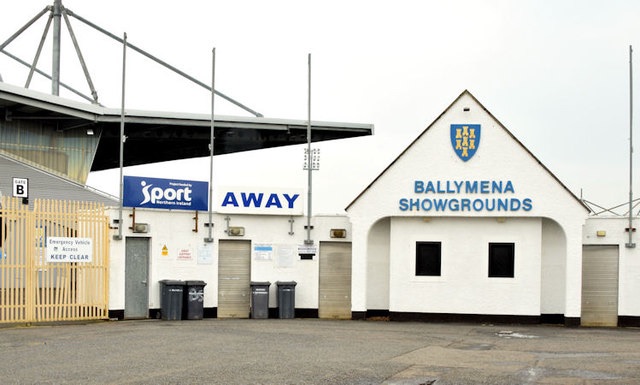
“The Showgrounds, Ballymena (May 2014) – geograph.org.uk – 3986556” by Albert Bridge is licensed under CC BY-SA 2.0.
Do you think the fact that you played until fairly recently helps you connect with players and attract them to the club, given your understanding of the modern game?
“Yeah, I’ve always been in regular contact with players from different clubs, even during my playing days, so I already had those relationships in place. That’s made it easier to speak to them, to explain exactly what we’re about, and to share the vision of where we want to take the club.
“We’re trying to raise standards, not just on the pitch, but off it as well. That includes how we carry ourselves around the town, how we treat people, how we speak to staff, fans, everyone connected to the club. It’s about building a more professional environment in everything we do, both at the ground and away from it.
“Having those existing relationships has helped us bring in players who understand that, who believe in what we’re trying to do. And alongside that, they bring a level of professionalism that we need. We’re relying on them to set the tone, lift standards and, hopefully, to guide the younger lads as they grow and develop, both as players and as people.”
In terms of your playing career, you were a youth player at Nottingham Forest. How much did you learn from that period of time as a young player?
“It was an incredible three years and It’s something I still talk about with my own family, just how much I learned. When I left school and went over, I basically went away a boy and came back a man. There was a lot of growing up to do.
“You had to start doing things for yourself, and the standards they set were incredibly high. Paul Hart, who was head of the academy, was unbelievable. Everything he did was about standards and how you looked around the ground, how you presented yourself coming away from training. Nobody was ever allowed to get carried away.
“I’ve carried that mentality with me ever since. When I signed for Linfield under David Jeffrey, he was very similar to Paul Hart in terms of how he ran things. He demanded that players conduct themselves properly, not just around the club, but in their personal lives too. You’re always representing the club, even when you’re not in the building.
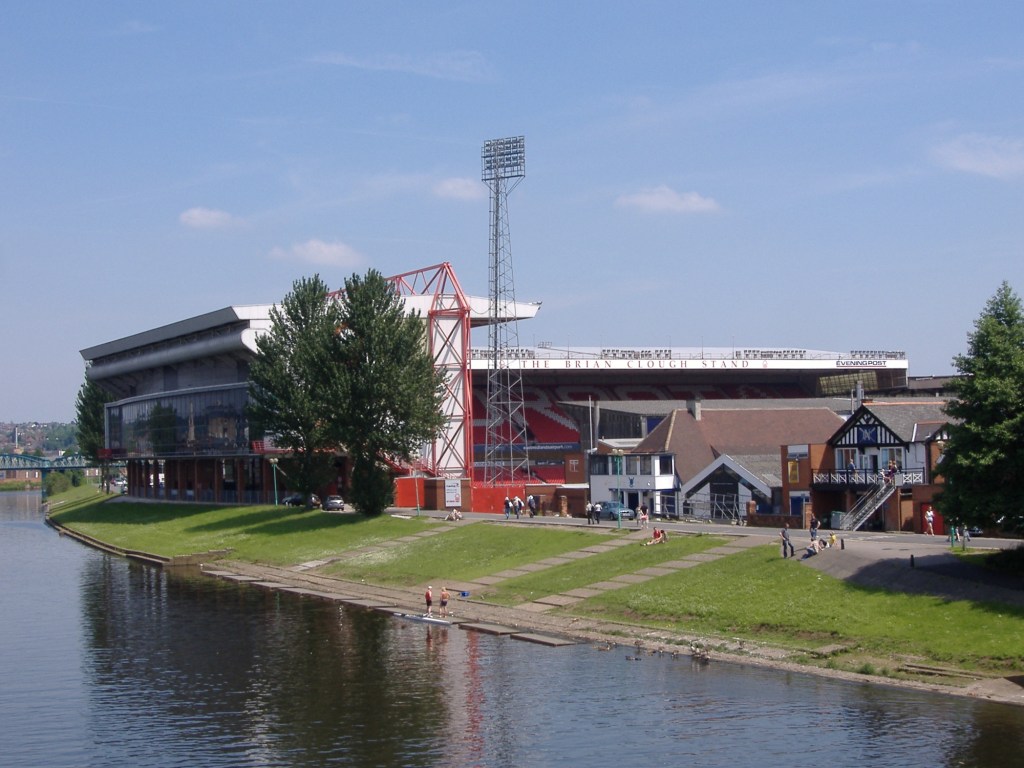
“Nottingham MMB 15 City Ground” by mattbuck (category) is licensed under CC BY-SA 3.0.
“My time at Nottingham Forest, then Linfield, and now at Ballymena, it’s the same principle. Whether you’re at the ground or not, you’re still seen as a player, still representing the badge.
“I had a really solid footballing education, and I think that goes all the way back to Joe Kincaid at St Andrew’s Boys’ Club. They were all about standards and how you carried yourself, how badly you wanted to win. I’ve always had that mindset, and I want to carry that into my own management as much as I possibly can.”
How did you feel when you returned to Northern Ireland to play under David Jeffrey at Linfield, and enjoy such a successful spell winning trophies at one of the country’s biggest clubs?
“I’m not going to hide from it. I was devastated when I got the news: ‘That’s it. It’s done. You’ll never be a professional footballer again.’ That was all that went through my mind.
“I went on trial with several clubs in England, but it just never worked out. When I came home, believe it or not, the two clubs that were really keen were Linfield and Ballymena United.
“David was obviously at Linfield, and Kenny Shiels was managing Ballymena at the time. Coming back into part-time football, I knew the money was never going to be enough to live on, so I learned quickly that I’d need to get a 9-to-5 job and fit my football around that.
“Both clubs offered similar terms, but in the end, because of the travel and the logistics of starting a new job, Linfield made more sense at the time. But I also knew there would be a lot of hard work needed to break into that team because they were really successful. When I signed, they had just come back from a European game in Helsinki, and the squad was full of quality.
“I got a run at the start. I think it was the CIS Cup, which had a group-stage format similar to what they do in Scotland now. I played the first five games and thought, ‘Brilliant, I’m going to get a real chance here.’ But then I picked up an injury, Stephen Douglas came in, and I barely kicked a ball for the rest of the season.
“That first year back home was frustrating, but I used the off-season to my advantage. I worked extremely hard during the six or seven weeks we had off. I made sure I was as fit as I could possibly be going into that second season and really, the rest was history because that was the year we won the clean sweep of a domestic treble.
“It was an unbelievable season. I think we played 52 games, missing only three all year. From there, we just built on it with six doubles in seven years, which is an incredible achievement. I honestly don’t think it’ll ever be done again.
“It was a hugely successful time for me, but it was also very demanding. At Linfield, if you’re not winning, you’re considered a failure. The expectations and standards at that club are absolutely enormous and they still are to this day.”
When you eventually left Linfield for Ballymena you linked up again with former Linfield teammate Glenn Ferguson initially before David Jeffrey took over in 2016.
The club then went on to win the League Cup for the first time in the club’s history. How proud were you of that achievement and your time playing for the club as a whole?
“Yeah, and it’s quite funny because I had a really successful time at Linfield, but I hadn’t really been played. It was one of those situations where I was never someone who was happy just to sit around. And I don’t mean that disrespectfully. I just didn’t want to be playing reserve team football. I’d already won and achieved everything I’d wanted to in football at Linfield.
“I was at the stage where I just wanted to play. And players know when their time’s up. I just felt like my time at Linfield was over. I wanted to be playing regularly again.
“Glenn Ferguson was in charge of Ballymena at the time. He was an ex-teammate, and I had so much time and respect for him. That’s ultimately why I ended up at Ballymena, it was for Glenn. Half of it was also down to players like Norman Kelly, Lee Doherty and people I’d admired from a young age when I was following Linfield. And then, obviously, having played with Glenn, I knew what he was about. I saw what he was trying to build at Ballymena, I listened to his vision, and I thought, ‘You know what? I’d love to be a part of that. I’d love to help him be successful and just enjoy my football again.’
“My early time at Ballymena was very good. I’d just joined in January, and we got to an Irish Cup final. We lost out to Glenavon, and unfortunately for me, I tore my cruciate and medial ligaments in that cup final. And we lost the game 2–1, so it was a double blow of an injury and defeat.
“But to be honest, not many people who leave Linfield in January would expect to be in an Irish Cup final that same season. The fact we got there just proved to me that it was the right move at the right time. You could see what Glenn was building.
“The following season, when I came back from the cruciate injury, we reached the League Cup final and lost to Cliftonville. So that was two seasons in a row in cup finals. Then, the season after that, we actually beat Linfield in the County Antrim Shield final at Windsor Park, winning 3–2. So in two and a half years at Ballymena, I’d played in three cup finals.
“That just showed what Glenn was doing was working. Maybe our league form wasn’t quite where it needed to be, but we’d become a really strong cup team. On our day, we could give anyone a run for their money. Consistency in the league let us down, but in cups, we were always a threat.
“Unfortunately, Ballymena made the decision to move on from Glenn. And at the time, I thought it was harsh. Like I said, in just two and a half years we’d reached three cup finals. Even in Glenn’s final season, we’d beaten Linfield in the County Antrim Shield. He had done a fantastic job.
“Replacing him was always going to be difficult but then they pulled off bringing in David Jeffrey. He was probably the only man in the country at the time who could take the club further.
“Under David, we went on to win the League Cup, for the first time in the club’s history, which was a huge moment. We also qualified for Europe, finishing second in the league two out of three seasons. We reached more Irish Cup finals. So even though we didn’t win loads of trophies, we were always in the mix. Finishing second and qualifying for Europe was massive.
“I remember beating Ronevik of the Faroe Islands in the Europa League qualifiers and then getting the chance to play Malmö. There were plenty of highs at Ballymena.
“So, yes, I’d won everything at Linfield. But in terms of cup runs and big games, Ballymena were hugely successful too. We just always seemed to fall short in the finals. But there’s no shame in losing to the likes of Linfield, Glentoran, or Crusaders who were teams challenging for the league title. That’s who we were up against.”

“Carrick Rangers” by Florian Christoph is licensed under CC BY 2.0.
You finished your playing career with Carrick Rangers in 2022. Were you already thinking about moving into coaching and management as you played into your late 30’s?
“Yes, even during the latter stages of my time at Ballymena, I was already looking ahead to the next chapter. I’d been working on my coaching badges and had completed my UEFA ‘B’ Licence before I left. So coaching and management were definitely on my radar.
“After Ballymena, I ended up at Carrick Rangers and spent two fantastic years there. Again, it was one of those situations where the move was driven by a connection of an old teammate and a close friend, Stuart King. It was his first job in senior football after managing Banbridge, and when he made the step up, he was looking for a certain type of player. He identified me, and once we spoke, it just made sense.
“I think any manager I’ve played under would tell you that I was never difficult when it came to contracts or money. That was never what I was about. I wasn’t in it for the financial side. I just wanted to enjoy my football, help out where I could, and support the people around me.
“Signing for Stuart was very similar to when I signed for Glenn Ferguson at Ballymena. I wanted Stuartie to be successful in his managerial career, and when he asked me to come to Carrick, it was a no-brainer for me, even at that stage of my career. Some people might have seen it as a step down from Ballymena to Carrick but I didn’t view it like that.
“I didn’t want to drop out of the Premiership. I had offers to go to Championship clubs, and financially, those offers were probably better. But that wasn’t my focus. I listened to Stuart’s plans, his ambitions for Carrick, and I wanted to be part of what he was trying to build.
“I had two unbelievable years at Carrick. Stuart put together a strong squad, and there were some brilliant people at the club. It was a really enjoyable time for me.
“Actually, when the Ballymena opportunity came up, I still had a year left on my contract at Carrick. But I was 39. I knew I wasn’t going to be playing much longer, and I also knew I might not feature heavily that coming season. I didn’t want the opportunity to manage Ballymena pass me by. It’s a massive club, and opportunities like that don’t come around often.
“So, when I realised there was genuine interest, and I looked at where I wanted to go longer-term, it felt like the right move. But it wasn’t an easy decision. I was leaving a club I really enjoyed being at, with people I had great respect for.”
Finally, Jim, you’ve recently signed a new, longer-term contract with Ballymena and I understand you’re now full-time at the club as well.
How significant is that for you, not just in terms of working more closely with the first team, but also having the opportunity to shape the wider direction of the club, including the youth setup and everything happening behind the scenes?
“Yes, that sums up my new contract very well, Callum.
“When we first came in, we were bringing a lot of young players up from the reserves into the first team. Ideally, you want to bleed them in gradually and introduce one or two when you’re already in a comfortable position in a game, surrounded by experienced players. But for us, it was the opposite.
“We were relying on these young lads in tough circumstances, in high-pressure games. You might have four or five boys making their debuts away to Linfield, away to Glentoran. Those fixtures are tough enough when you’re at full strength, never mind when you’re fielding an inexperienced squad. It was a big ask, but it shows how much we depend on our academy to produce players.
“When you’re a part-time manager, working a full-time 9–5 job alongside the role, it’s difficult to find the time to really get involved with the academy. Managing in the Irish League, even in a part-time role, is a 24/7 commitment. So trying to balance that with being hands-on with the youth setup was always a challenge.
“When the club approached me about a new contract, they proposed the idea of going full-time. That opened the door for something bigger in terms of not just focusing on the first team, but really getting to grips with the entire structure of the club, especially the academy.
“Now, with that extra time, I can take a more active role in shaping the direction of the youth system. We’re actually in the final stages of putting a new structure in place for the academy, which will be announced in the coming weeks.
“That sort of development takes time. We’re not going to see the benefits overnight and it’s going to take a few years, a phased approach, and some tough decisions around what’s currently in place. But the goal is to create a clear pathway between the academy and the senior team.
“Long-term, we want everything to be aligned from the style of play to our standards and our values as a club. The academy and the first team should be moving in the same direction. And if we get that right, it’ll stand the club in good stead for years to come.”
Featured photograph: Ballymena United Football Club
 Callum McFadden