
For years, Paris Saint-Germain were football’s great contradiction: a club with limitless ambition, superstar names and domestic dominance, yet one that repeatedly fell short when the pressure of the UEFA Champions League Final reached its peak.
Now, that story has changed completely.
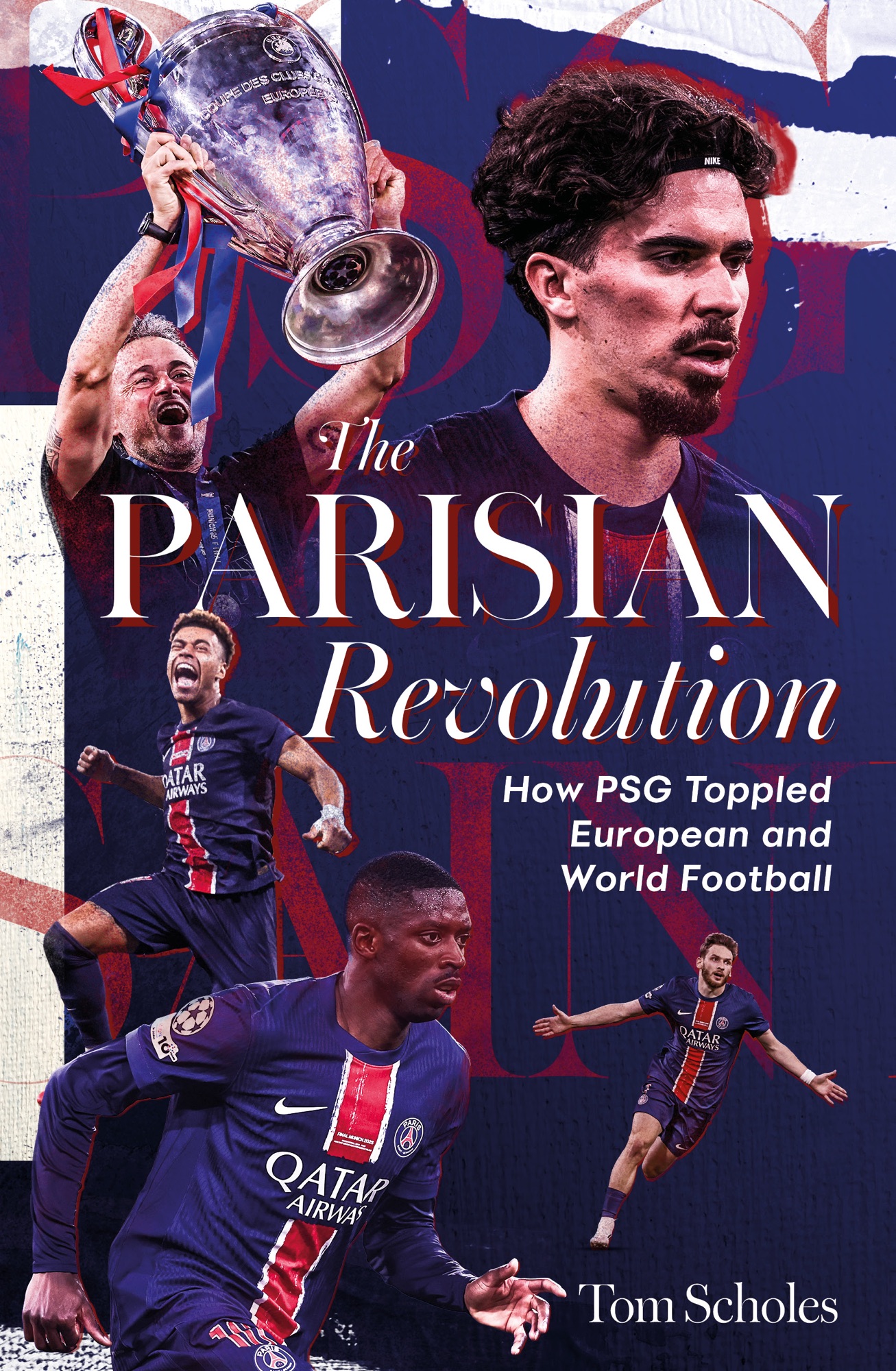
Under Luis Enrique, PSG have evolved from a collection of global celebrities into the most cohesive and tactically ruthless side in Europe, a transformation explored in depth in Tom Scholes’ new book, The Parisian Revolution.
According to Scholes, the shift was not simply tactical. It was cultural.
“Beforehand,” he explains, “the transfer decisions weren’t ones that fit the team, they were ones that fit the brand.”
That mentality defined the PSG era of Neymar, Lionel Messi and Kylian Mbappé: breathtaking individuals assembled together, but rarely functioning as a truly unified machine. As Scholes points out, modern elite football increasingly rewards collectives rather than superstar-driven projects.
“The superstar in football now is the collective,” he says.
That philosophy became the foundation of PSG’s rise.
The arrival of sporting architect Luis Campos reshaped recruitment, while Enrique became the uncompromising figure capable of enforcing a new identity throughout the dressing room. Scholes highlights Enrique’s relentless demand for pressing and discipline as the defining trait of this PSG side.
Even with the Champions League final effectively won, Ousmane Dembélé was still sprinting to press the goalkeeper with PSG leading comfortably, a moment Scholes believes symbolised the complete mentality shift inside the club.
The contrast with previous PSG eras could not be sharper.
When Neymar arrived for a world-record fee, the team was forced to adapt around him. When Messi joined Mbappé and Neymar, PSG possessed extraordinary talent but lacked the intensity modern football demands.
“You can’t play a pressing game with those three,” Scholes says bluntly. “They just don’t want to do it.”
Enrique changed that completely.
Unlike several previous PSG managers, he arrived with the authority of a proven Champions League winner and refused to compromise his principles. Scholes describes him as “very clear with his message” and unwilling to “bow down to any kind of external pressure.”
That clarity allowed PSG to fully embrace a modern identity built around tactical intensity, technical quality and collective sacrifice.
Ironically, the departure of Mbappé may have accelerated the transformation.
Rather than collapsing after losing their biggest star to Real Madrid, PSG flourished. Scholes argues that the reaction in Paris was remarkably muted because the club had finally become bigger than any individual player.
“There is no mention of the guy,” he says. “They got the job done.”
For Scholes, the defining moment of PSG’s Champions League-winning mentality came against Liverpool FC. After competing in a tough first-leg despite dominating the match, PSG responded even more fearlessly in the return fixture.
“That was the moment where it became for me, ‘This team is built differently,’” he explains.
Instead of shrinking under pressure, as previous PSG sides often had, Enrique’s team doubled down on their identity.
By the time they reached the final, Scholes believed there was “never really a doubt” because PSG were operating at a level few sides in Europe could match.
What makes The Parisian Revolution compelling is that it goes beyond the headlines and superstar narratives. The book examines how PSG finally escaped the trap that has consumed so many modern football projects: confusing celebrity with cohesion.
This is not simply a story about winning the Champions League. It is a story about how one of football’s most scrutinised clubs reinvented itself from the inside out.
And in doing so, PSG may have provided the blueprint for the future of elite European football.
Tom Scholes’ The Parisian Revolution explores the tactical evolution, recruitment overhaul and cultural reset that turned PSG from perennial nearly-men into champions of Europe.
The Parisian Revolution by Tom Scholes is available from Pitch Publishing and all good bookstores.
 Callum McFadden